
One printed rocket engine every 24 hours — sustained until the thousandth unit rolled off the line. Rocket Lab’s Rutherford engine program reached 1,000 completed units by the end of 2025 — one printed rocket engine roughly every day of the journey, with more than 800 of them already flown across 70+ Electron launches[1]. That is not a prototype story or a trade-show story; it is the clearest public dataset we have on what metal additive manufacturing looks like when it stops being special and becomes a production line. This article takes the Rutherford milestone apart — the engine design that made it possible, the electron beam process choice behind it, the quality system that lets a printed part fly — and extracts the five lessons any manufacturer needs before moving metal AM from sampling to series production.

The Engine That Made Printed Production Possible
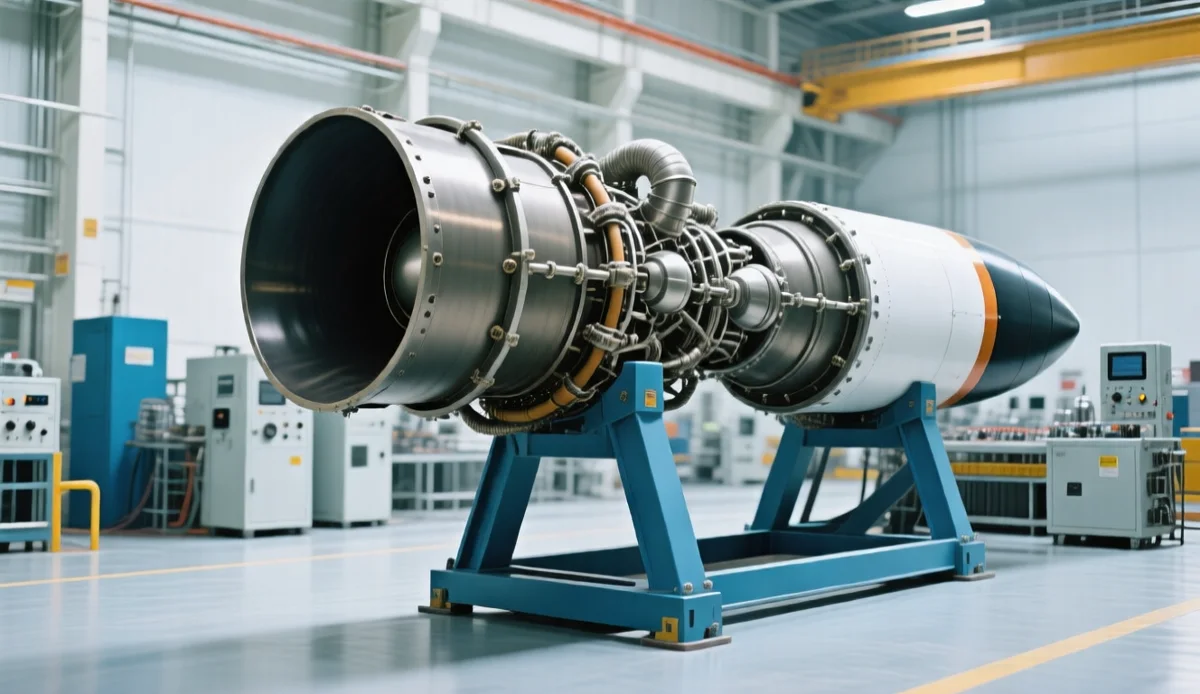
Rutherford is an unusual engine in a useful way. It is electric-pump-fed: instead of the classic gas generator or staged-combustion turbopump — a small rocket engine driving the fuel pumps, with all its valves, preburners, and plumbing — Rutherford spins its turbopumps with battery-powered electric motors. The architecture deletes the most assembly-heavy subsystem in liquid rocketry, and what remains (injector, combustion chamber, main structures) was designed from day one to be printed.
The numbers behind the milestone[1]:
| Metric | Value |
|---|---|
| Engines completed | 1,000th unit by end of 2025 |
| Production rate | ~one engine per 24 hours |
| Flown to date | 800+ units |
| Launches supported | 70+ Electron missions (9 first-stage engines each) |
| Core printed process | Electron beam melting (EBM) |
| Next generation | Archimedes (Neutron rocket), designed for 20 reuses |
Read that table as one sentence: a printed metal part family crossed from “advanced manufacturing” into “industrial commodity” — a unit a day, eight hundred flight proofs, and a successor engine (Archimedes) scaling the same philosophy to a reusable medium-lift vehicle[1].
Why Electron Beam and Not Laser: A Production Decision
Most metal AM discussion defaults to laser powder bed fusion (LPBF), and our own process guide covers why LPBF dominates precision work. Rutherford’s production story is the strongest public case for the other branch of the family, electron beam melting:
- Hot, stress-free builds. The EBM powder bed runs at elevated temperature in vacuum, so parts come out with residual stress largely annealed away — fewer cracked builds, less fixture-driven distortion, and (for engine components) reduced stress-relief burden. Compare the dedicated heat-treatment discussion in our HIP vs stress relief guide: EBM shifts that whole cost curve left.
- Beam, not optics. The electron beam is steered electromagnetically with no moving mirrors — faster scan repositioning, and multi-melt strategies where several cross-sections fuse in parallel. That throughput is a direct enabler of the 24-hour engine cadence.
- Support economy. Sintered powder is largely self-supporting in EBM, so support volume and removal labour drop — meaningful when every unit is a flight part on a daily takt.
- The trade. EBM’s vacuum chamber, rougher as-built surface (typically higher Ra than LPBF), and coarser minimum feature size rule it out for fine-detail or cosmetic parts. Rocket engines, where internal performance beats surface finish, sit in its sweet spot.
The generalizable point: process choice at production scale is a cost-per-flight-unit decision, not a resolution contest. Rutherford chose throughput and stress freedom; a medical implant line chooses surface and precision. Both are right.
What “One Engine per Day” Actually Requires
The headline cadence hides the real engineering. A daily takt on flight hardware means the printing is the easy third of the operation:
- Powder logistics at industrial scale. Every build consumes and reuses powder; at 1,000 engines, powder screening, storage, lot traceability, and reuse cycles become a supply chain of their own. The qualification science behind that — particle size distribution, sphericity, oxygen pickup — is covered in our powder PSD guide. Reuse economics get their own treatment in the powder reuse analysis.
- Per-unit inspection, sampled process proof. You cannot CT-scan every engine to aerospace depth on a daily takt; you qualify the process, then verify per-unit at critical points (witness coupons, dimensional checks, flow tests). That inspection architecture — and the standards behind it — is exactly what our 2026 metal AM standards guide maps out.
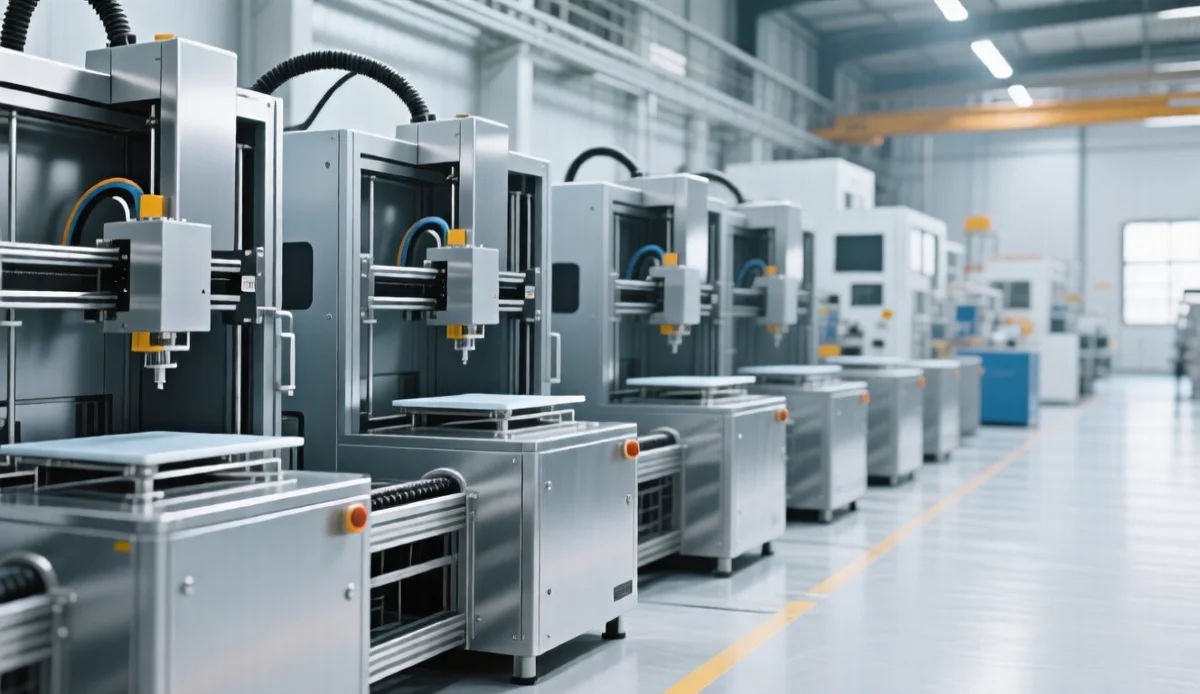
- Machine-fleet thinking. Daily output is not one fast machine; it is a fleet whose utilization, maintenance windows, and build scheduling are balanced like any CNC cell — except the “tool change” is a recoater blade and a parameter set.
- Design freeze discipline with iteration pockets. Production cadence demands a frozen design; Rocket Lab still iterated across Raptor-class timelines elsewhere in the family. Knowing which features are frozen and which are still improving is a management decision most AM adopters skip.
Fleet Data: The Advantage Nobody Brochures
Eight hundred flown engines are eight hundred sets of real boundary-condition data: vibration spectra, thermal cycles, start sequences, off-nominal events. No ground test program produces that corpus. The feedback loop — flight anomaly → process or design correction → verification build → fleet update — runs at a speed traditional certification timelines cannot match, because the printed hardware can absorb a revision without retooling. This is the deepest lesson of the milestone: at production scale, AM’s advantage is not per-part cost but per-revision cost. Compare that with the SpaceX Raptor lineage, where revision speed defined the program — analyzed in our Raptor 3 article.
Archimedes and the Reusability Multiplier
Rocket Lab’s next engine, Archimedes for the Neutron rocket, is designed around 20 reuses[1] — a different AM challenge than expendable engines. Reuse shifts the printed-part problem from first-article performance to cyclic durability: thermal fatigue of printed chambers, inspection intervals, refurbishment economics. The methane-oxygen Archimedes also grows the thrust class, testing whether EBM/LPF production methods scale with the hardware. If Rutherford proved printed engines can be made daily, Archimedes is the live experiment in whether they can be flown repeatedly — the question that matters for every reusability-driven industry watching, from launch to power generation.
Five Lessons for Moving Your Own Metal AM to Series
| # | Rutherford lesson | Your translation |
|---|---|---|
| 1 | Architecture enabled AM (electric pumps deleted the hardest assembly) | Redesign the product around the process; don’t print the old design |
| 2 | EBM chosen for throughput and stress, not resolution | Pick the process by cost-per-good-unit, not spec-sheet maxes |
| 3 | Powder became a supply chain at 1,000 units | Budget powder qualification, reuse policy, and traceability before volume, not after |
| 4 | Inspection = qualified process + per-unit critical checks | Build the inspection architecture with your standard (ISO/ASTM), not ad hoc |
| 5 | 800 flight units = fleet data loop | Instrument your field parts; per-revision cost is where AM compounds |
None of this requires building rocket engines. A mould-tooling line, a hydraulic manifold family, or a medical implant series hits the same five walls in the same order — our AM vs CNC cost analysis covers where the crossover sits for typical part classes.
Common Misconceptions
“A thousand printed engines means printing is cheap now.” It means printing is industrialized for the right part. Rutherford’s economics work because the design was born additive and the volume justifies the fleet. Print the wrong part and unit 1,000 costs the same as unit 1.
“EBM is outdated next to laser machines.” Different tools, different jobs. EBM’s hot-chamber stress freedom and beam throughput are production features; LPBF’s precision and surface are product features. The thousand-engine milestone is an EBM trophy.
“Flight-proven means no quality risk.” It means the quality system works — and the system (powder control, process qualification, per-unit checks) is the expensive part most adopters underestimate. Hardware without the system is a demo, not a production line.
FAQ
How many Rutherford engines has Rocket Lab built?
The 1,000th printed Rutherford engine was completed by the end of 2025, with 800+ units flown across more than 70 Electron launches.
Are Rutherford engines really 3D printed?
The core components — injector, combustion chamber, and main structures — are printed by electron beam melting (EBM), with conventional machining and assembly on interfaces. The electric-pump architecture removes the turbopump, making the printed fraction unusually high for a flight engine.
How fast can Rocket Lab print a rocket engine?
Reported production cadence is roughly one completed Rutherford engine per 24 hours — a fleet output, enabled by EBM throughput and a production system around the printers.
Why does Rocket Lab use electron beam melting instead of lasers?
Hot vacuum builds come out stress-relieved, beam steering enables faster multi-melt strategies, and sintered powder cuts support labour — the right trade-offs for engine components at daily takt, where surface finish matters less than throughput and reliability.
What is the Archimedes engine?
Rocket Lab’s larger methane-LOX engine for the reusable Neutron rocket, designed for 20 reuses — the next test of whether printed engines scale from daily production to repeated flight duty.
Can these production methods apply outside aerospace?
Directly. The five requirements — additive-native design, process chosen by unit economics, powder as a supply chain, standards-based inspection, and fleet data loops — are identical for mould tools, hydraulics, medical series, and any part family crossing from samples to series.
What makes 1,000 units a meaningful milestone?
Volume converts every hidden AM cost into a visible one: powder reuse policy, inspection architecture, machine utilization. Programs that survive to unit 1,000 have answered questions that brochures cannot — which is why the milestone is the best public evidence that metal AM is industrially mature.
Conclusion: The Prototype Era Ended at Engine 1,000
The Rutherford milestone reframes the metal AM conversation from “can it fly?” to “can it keep making them?” — and the answer, at one engine a day with eight hundred flight proofs, is unambiguous. The requirements are portable: additive-native architecture, process choice by unit economics, powder traceability, a real inspection system, and data loops from the field. If your part family is approaching the volume where these questions become yours, start with the honest cost comparison in our AM vs CNC guide, and send the family — not a single part — through our RFQ page: series economics only show up when the whole family is on the table.
References
- AM易道 (AM Yidao). “Rocket Lab 第 1000 台 3D 打印卢瑟福发动机下线:增材制造改写火箭生产纪录” (Rocket Lab’s 1000th 3D printed Rutherford engine: additive manufacturing rewrites rocket production records). amyidao.com. Link (accessed September 2, 2026).
- Baidu Baijiahao. “火箭实验室 3D 打印引擎产量突破 1000 台” (Rocket Lab 3D printed engine production passes 1,000 units). Link (accessed September 2, 2026).
- Sohu Tech. “第 1000 台 3D 打印火箭发动机下线,火箭实验室创造行业纪录” (The 1000th 3D printed rocket engine rolls off the line). sohu.com. Link (accessed September 2, 2026).