The Lost-Wax Problem
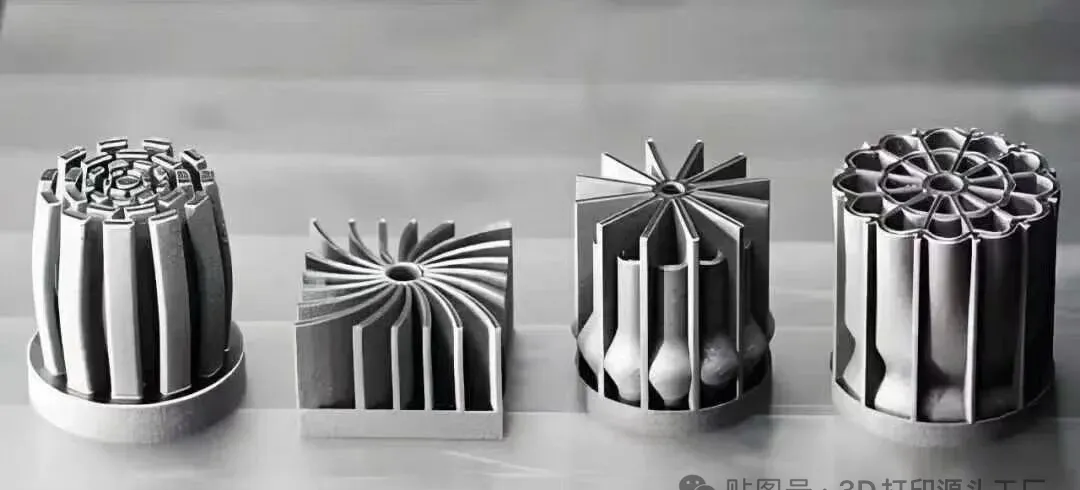
Traditional precious metal jewelry manufacturing relies on lost-wax casting — a process essentially unchanged for thousands of years. Carve or print a wax pattern. Invest it in plaster. Burn out the wax. Pour molten metal. Break the mold. Cut off the sprues and runners. Polish. The yield rate is approximately 80% — 20% of the metal becomes sprue waste. Every design change requires a new wax pattern. Every new product requires minimum production runs to amortize the mold and setup cost.
Direct metal AM eliminates every step between CAD and finished part — the laser melts metal powder straight into the final geometry. No wax. No mold. No sprues. No minimum. For precious metals (gold, platinum, silver) we confirm availability up front, as gold printing is in development and platinum/silver are on request.
Legor Group: €128M in Precious Metal AM
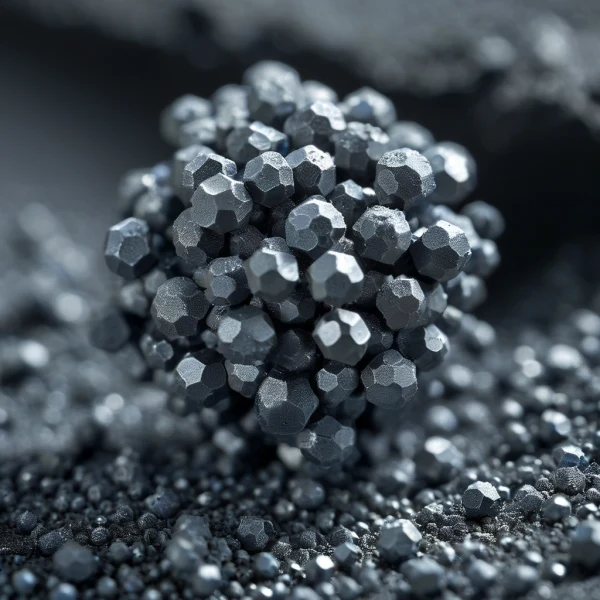
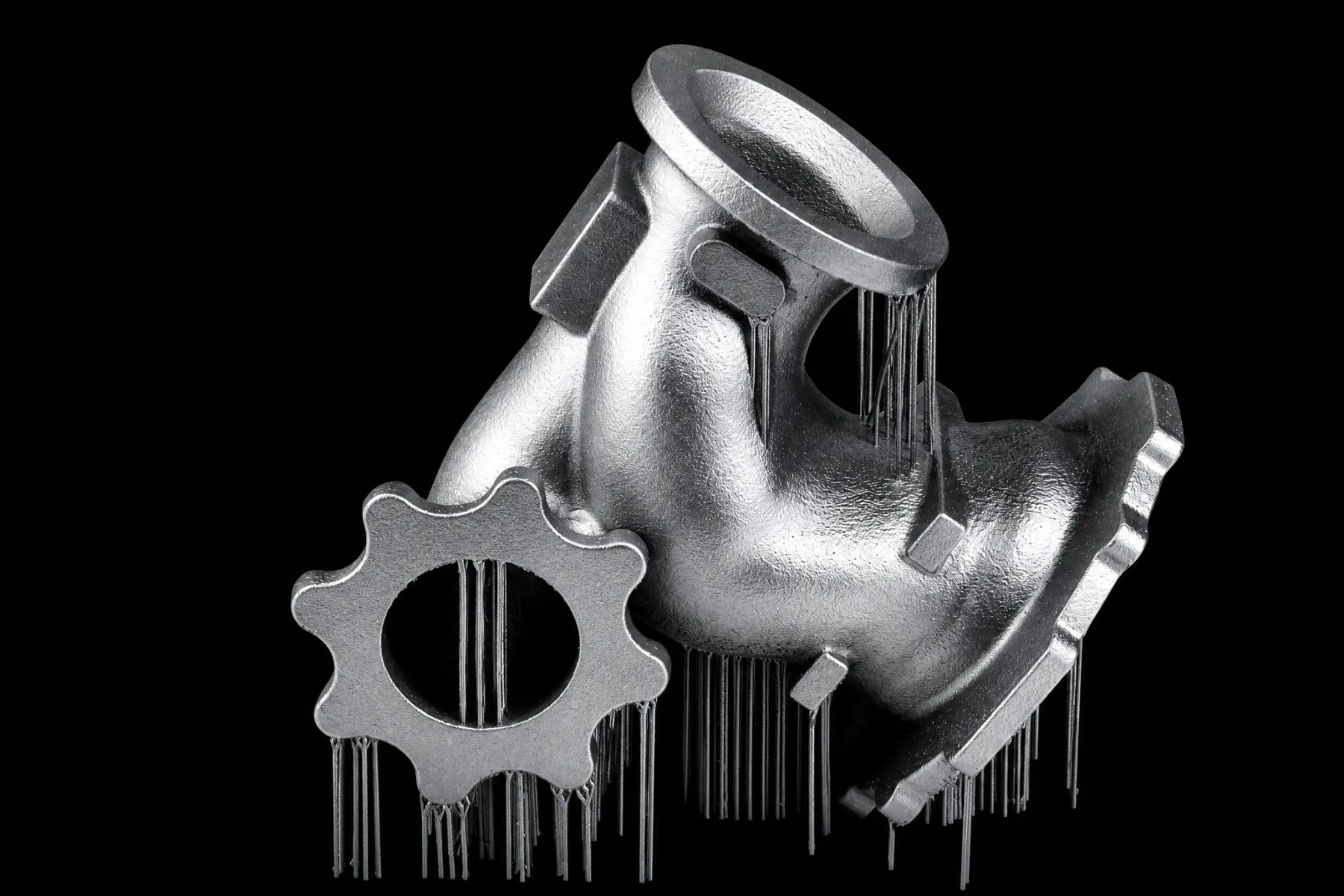
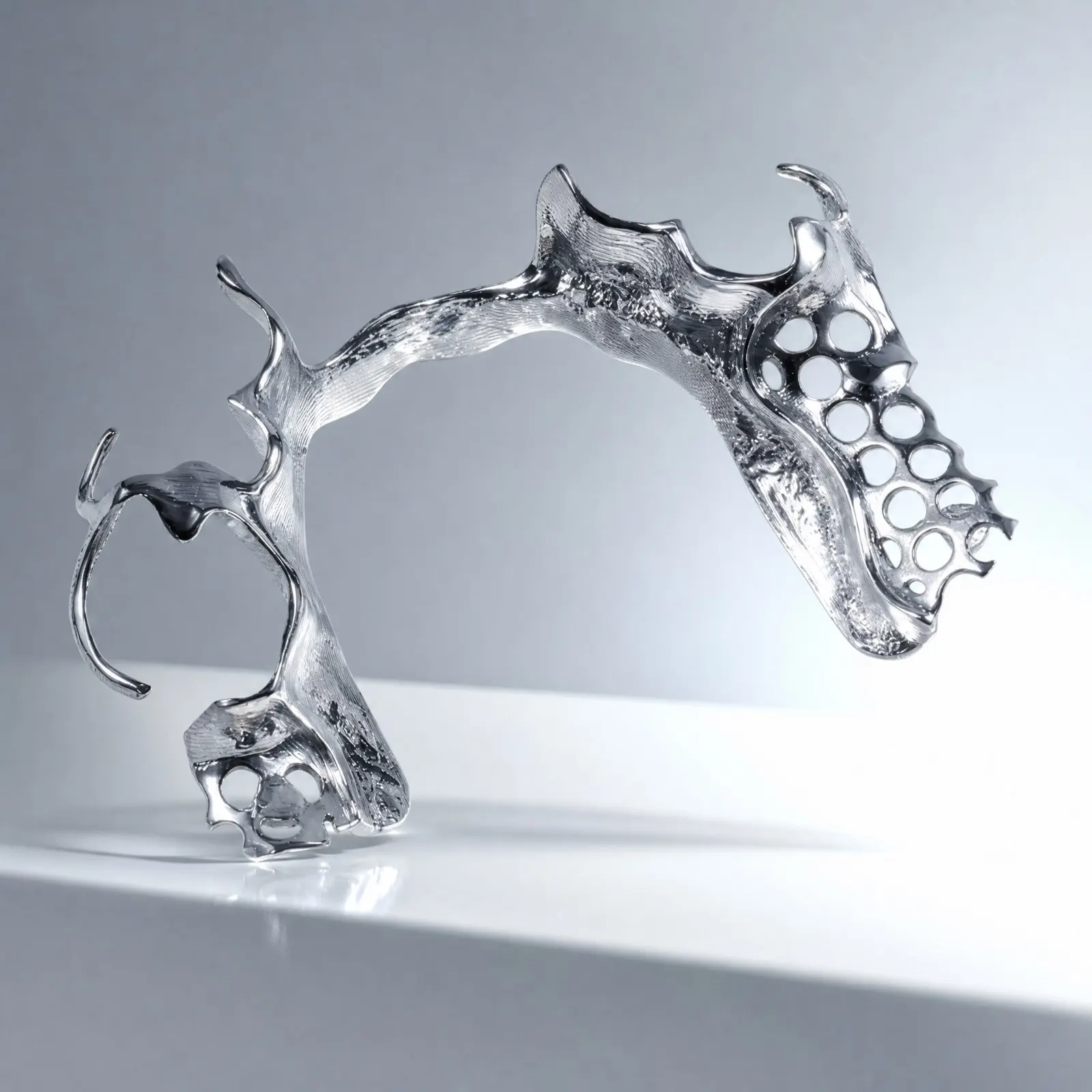
Legor Group (Italy) built a dedicated precious metal 3D printing hub — 3D Metal Hub — using HP Metal Jet and Tritone MoldJet technology to directly print gold, platinum, and silver. Their AM division has been spun off as an independent entity. Legor Group 2025 turnover: €128 million (group-wide) — proof that precious-metal AM already operates at commercial scale.
HP and Legor continue to collaborate on binder jetting for precious metals at production scale. The technology, supply chain, and quality are proven at production scale. Wider adoption now depends on designer awareness.
Sculpture, Installation, and Design Objects
The economics of metal AM for art are unique because the value of the object is not determined by manufacturing cost. A sculpture that sells for $5,000–50,000 justifies a build cost that a bracket never could. What matters is: can the geometry be realized?
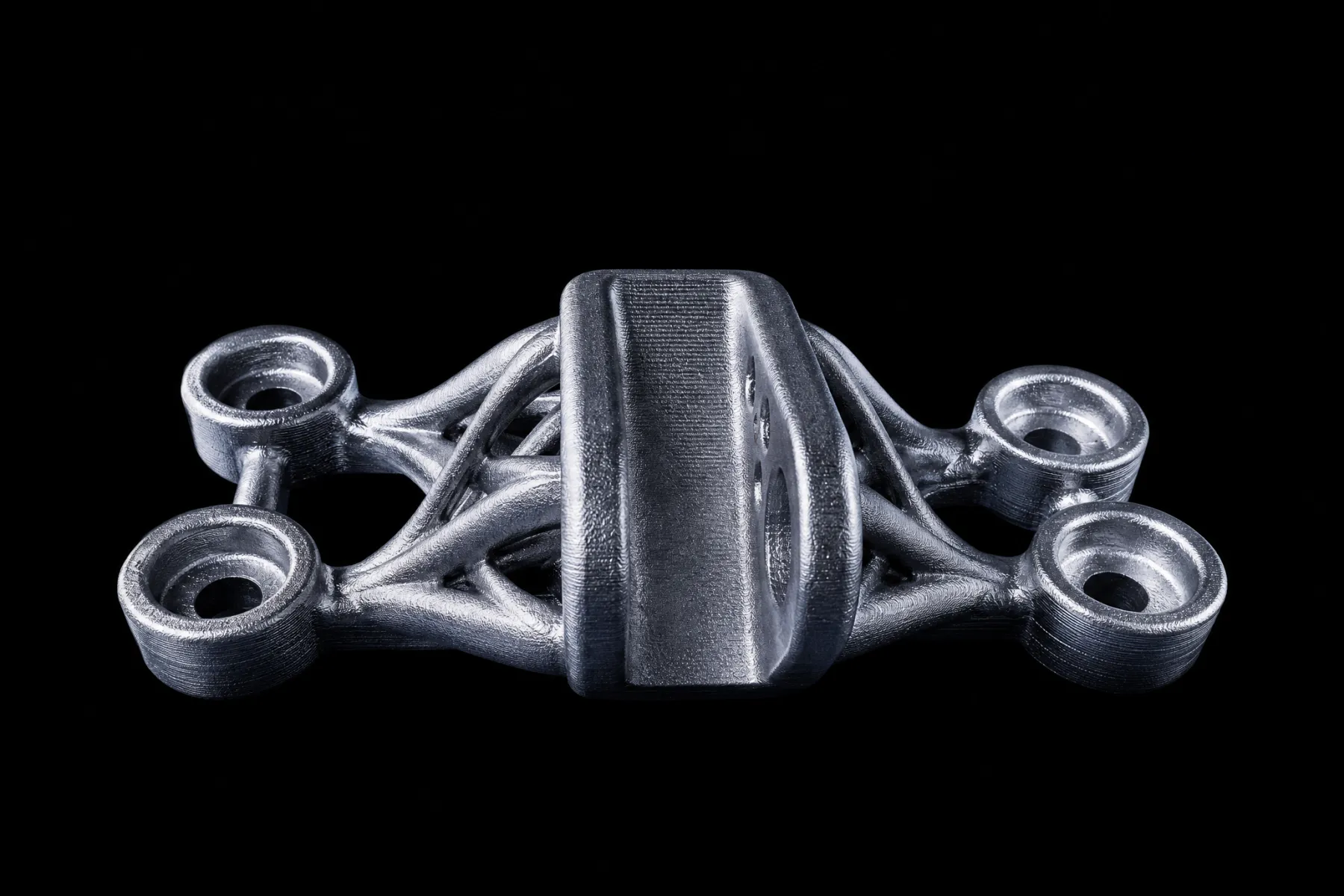
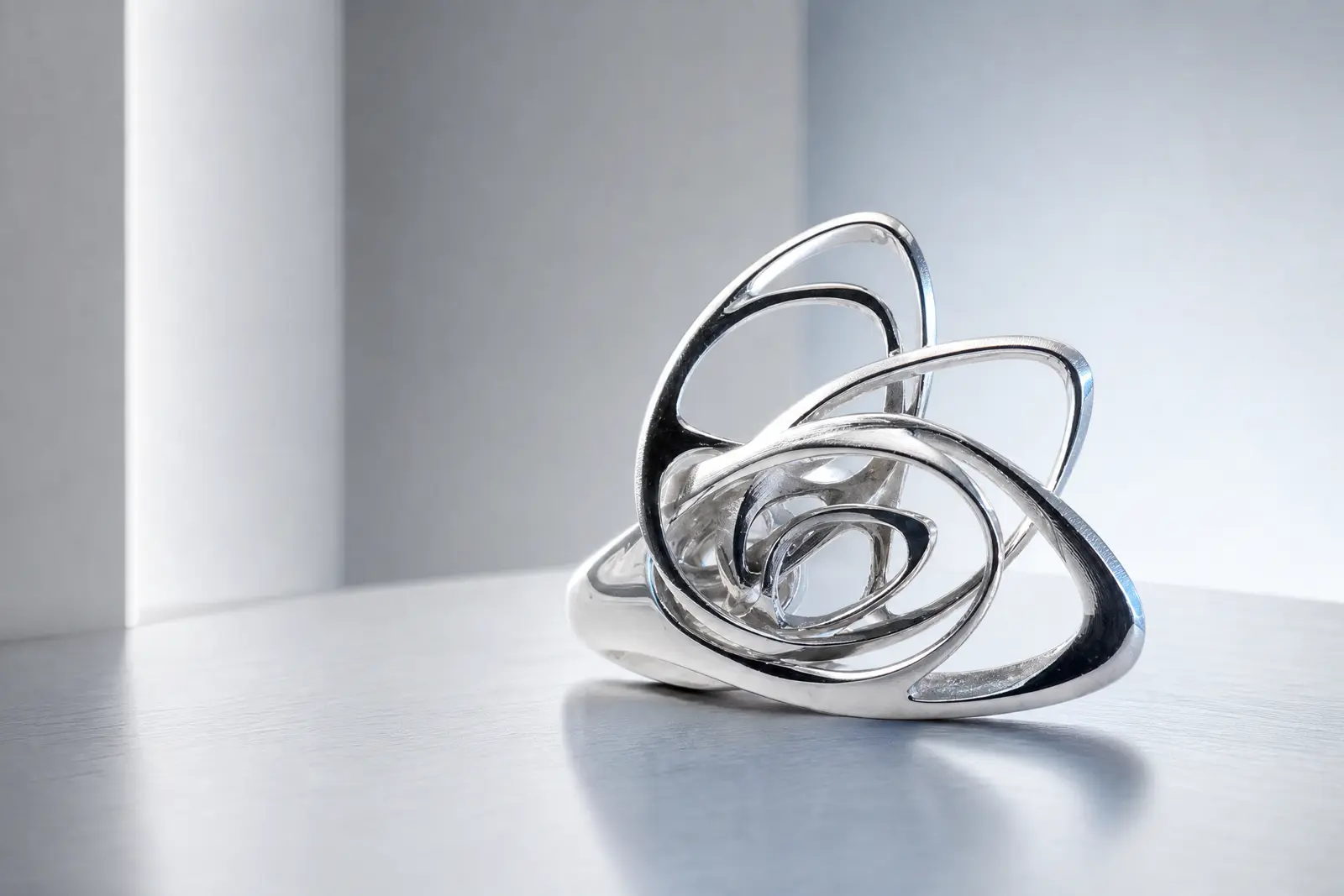
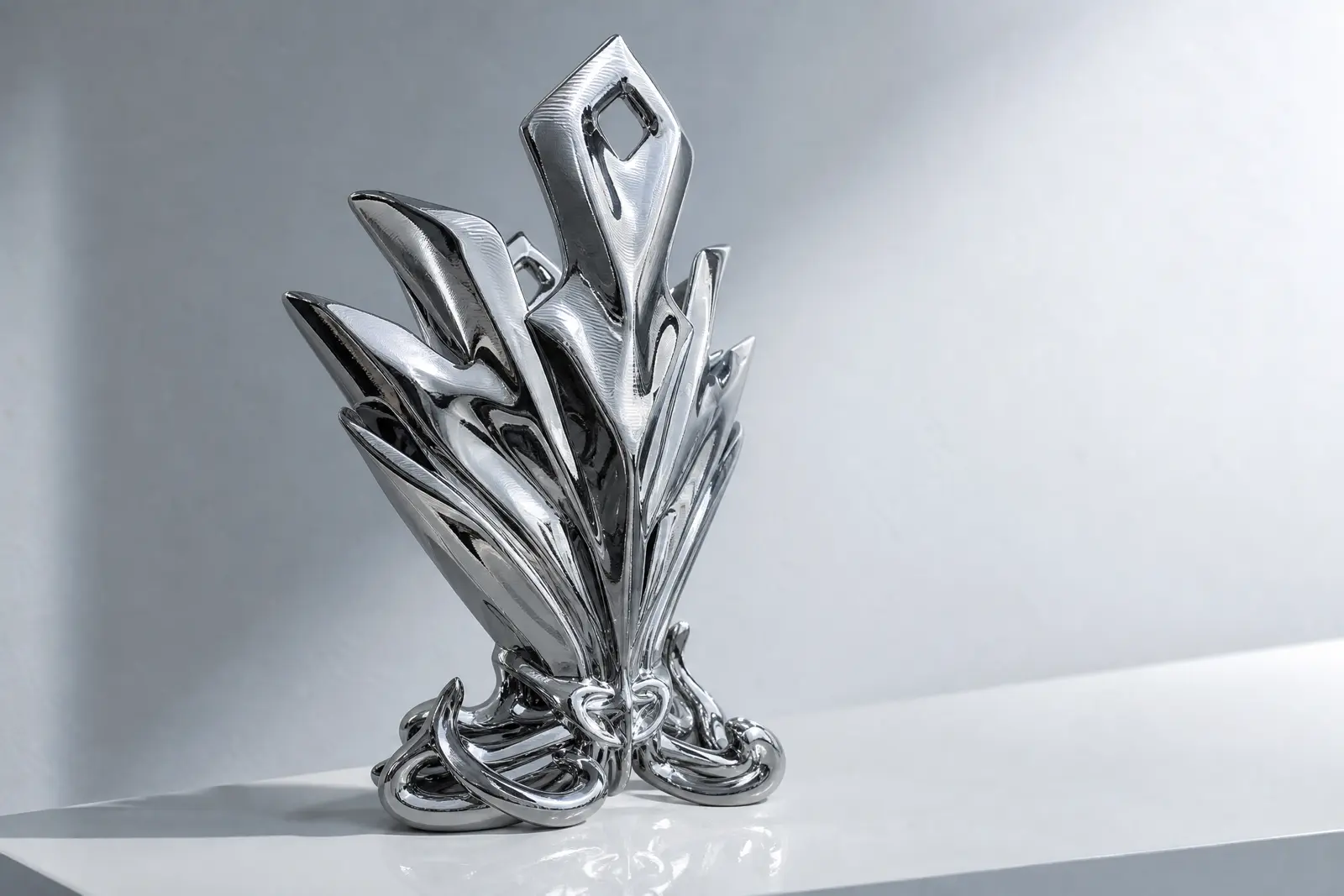
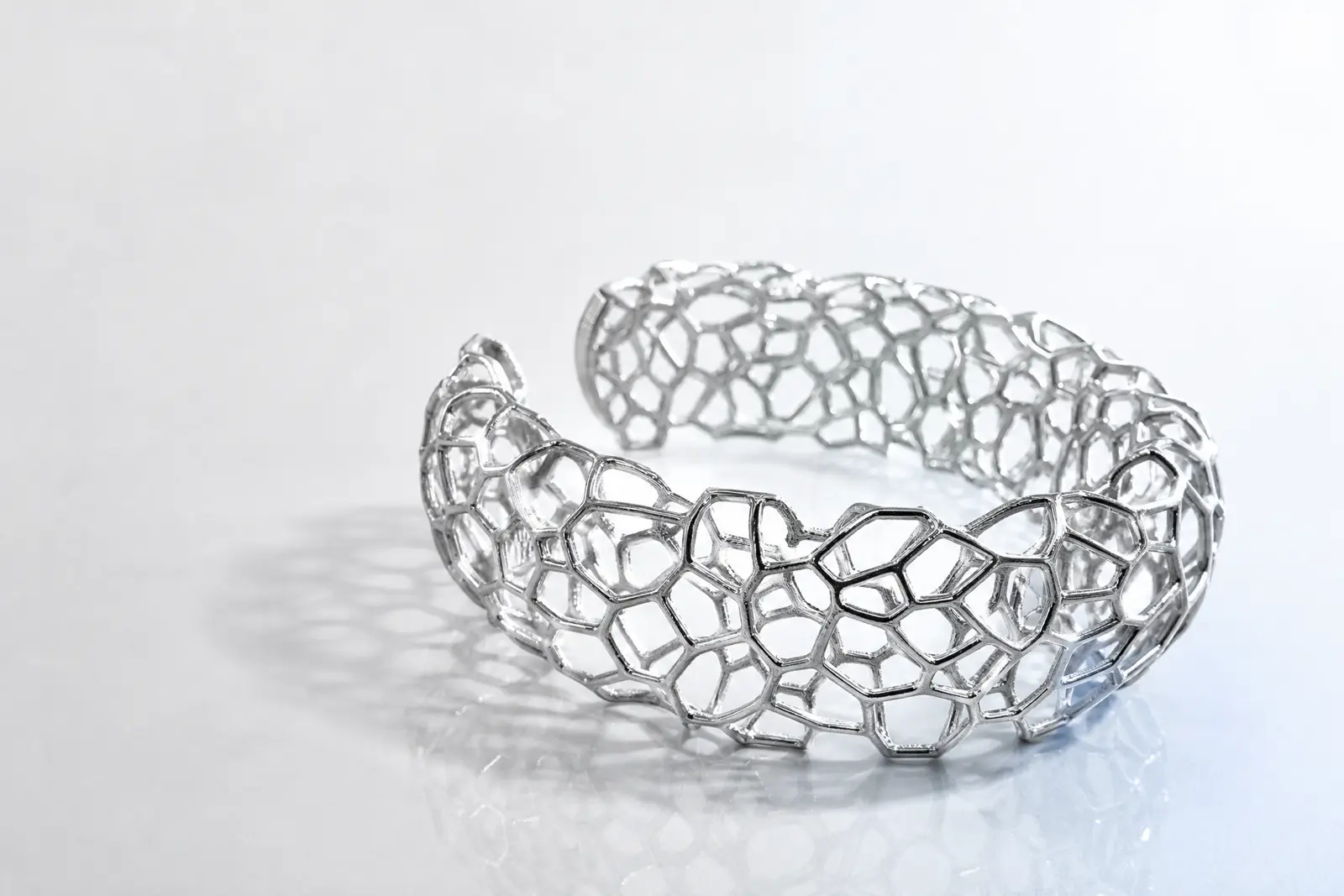
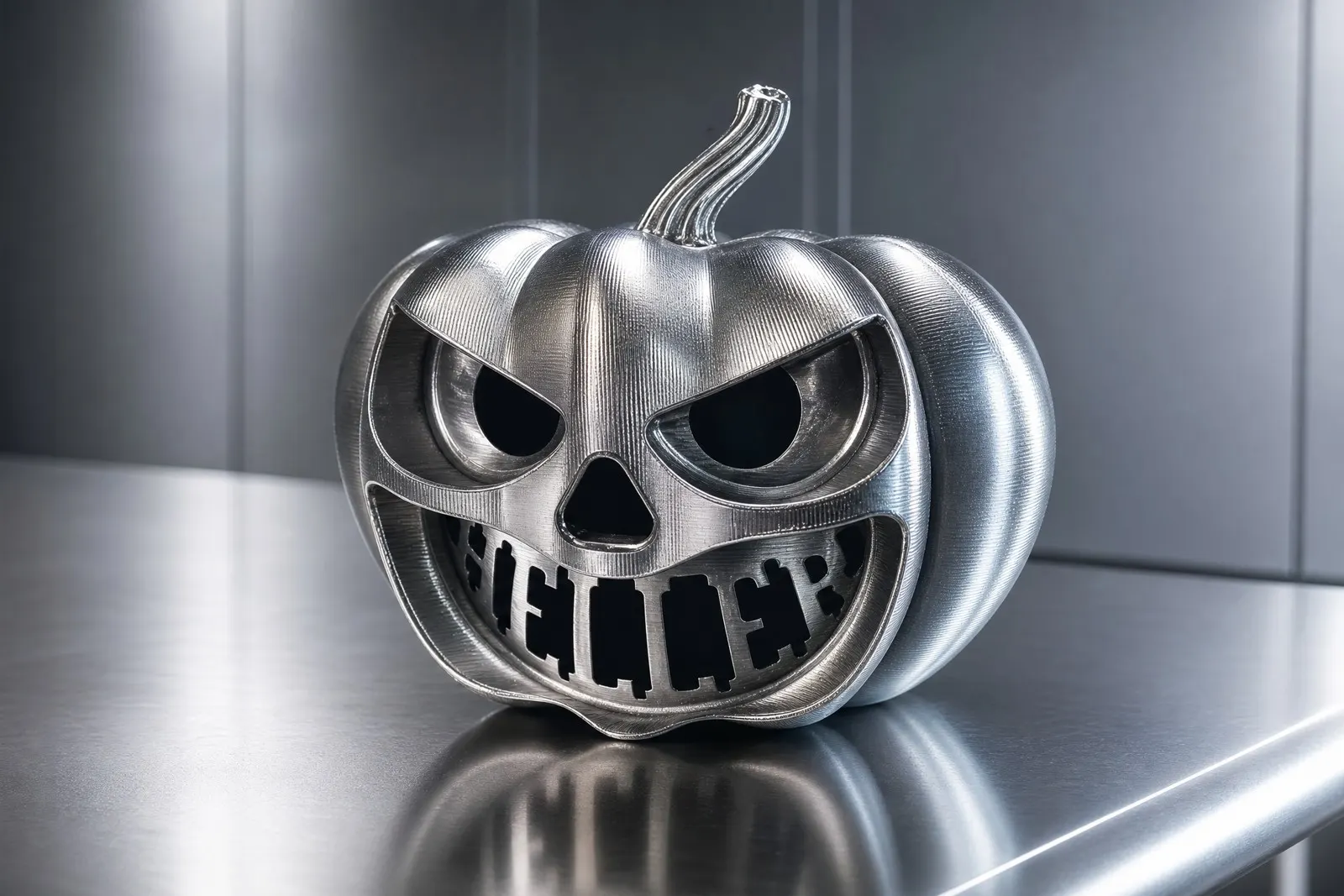
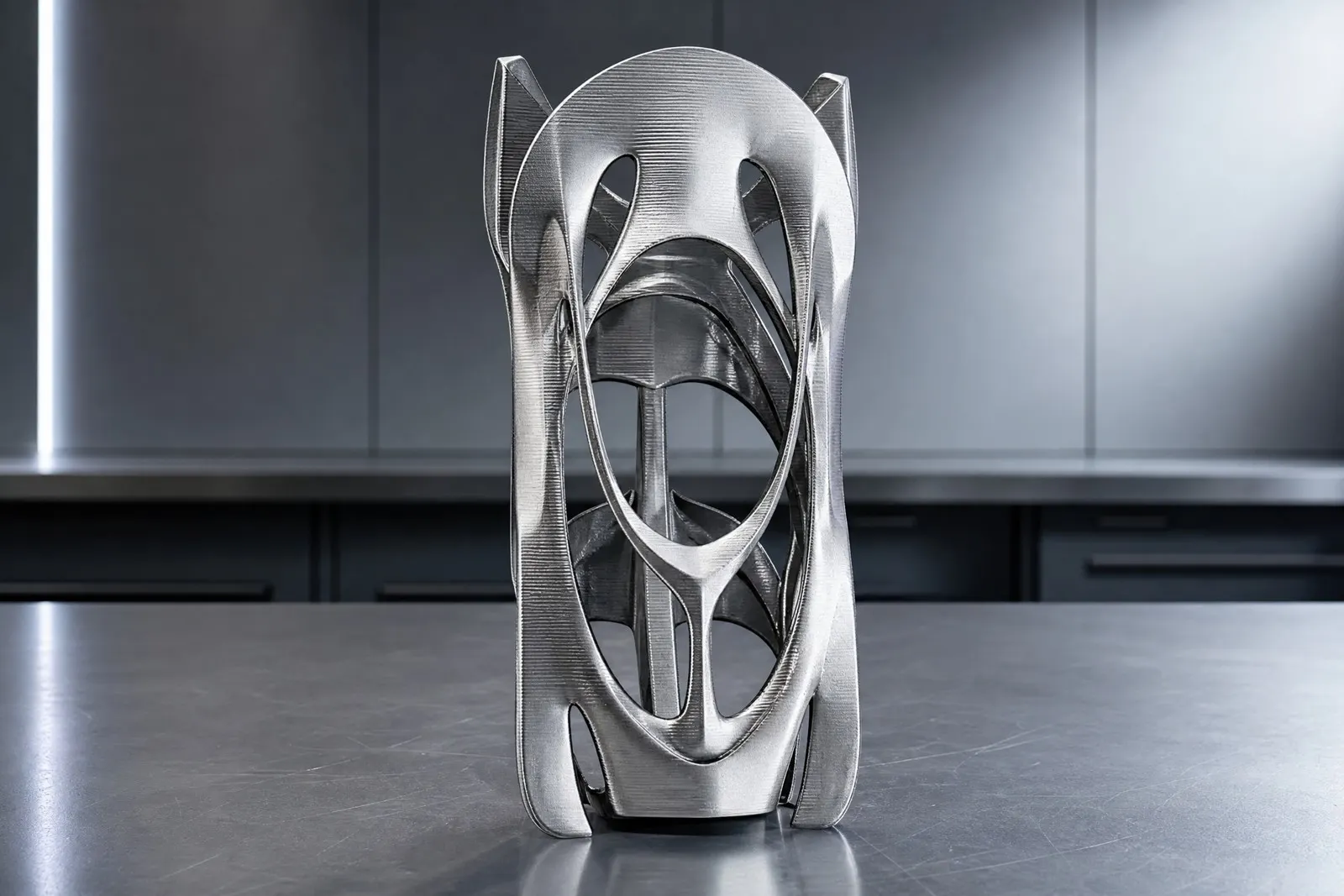
AM enables artists and designers to produce forms that cannot be cast, forged, or machined: interlocking parts printed as a single object, internal voids and passages visible only from certain angles, mathematically generated lattice structures, variable surface textures embedded in the CAD model, and zero-draft-angle forms that would lock into any mold.
Artists who work with metal AM — Bathsheba Grossman (mathematical sculpture), leading jewelry designers in VicenzaOro competitions — are not using AM to replicate what casting does. They are using it to do what casting cannot.
AM vs Lost-Wax Casting
| Factor | Lost-Wax Casting | Direct Metal AM |
|---|---|---|
| Mold/tooling cost | Per design | $0 |
| Minimum quantity | Dozens–hundreds | 1 |
| Material yield | ~80% (sprues, runners) | 90%+ (powder recycled) |
| Design iteration | New wax pattern | CAD edit + re-print |
| Geometric freedom | Draft angles, min wall thickness | Near-unlimited |
| Lattice/hollow structures | Impossible | Standard |
| Express delivery | Not possible | 3–5 days |
Discuss an art or jewelry project →
Art & Jewelry FAQ
Can you print in precious metals (gold, silver, platinum)?
Platinum and silver are available on request; gold printing is in development. For most art and jewelry applications, we recommend titanium, stainless steel, Cobalt Chrome, or aluminum — all of which deliver the geometric freedom of AM at lower material cost.
What's the finest detail you can print?
L-PBF with 30–60 μm layers can resolve fine detail; minimum wall thickness is 0.5 mm. For jewelry-level detail, this suits most designs. Extremely fine filigree work below this threshold may require post-processing or alternative approaches — discuss with our DfAM team.
Can I sell my designs directly through you?
3D Demiurge is a manufacturing service, not a retail platform. We produce your designs to your specification and ship them to you. What you do with them — gallery, retail, commission — is your business.
Can you finish jewelry to a wearable standard?
Our in-house post-processing includes bead blasting, polishing, and electropolishing. For jewelry-grade mirror finishes, additional hand-polishing may be required — we can coordinate this or you can use your own finishing jeweler. We'll recommend the right approach for your design.