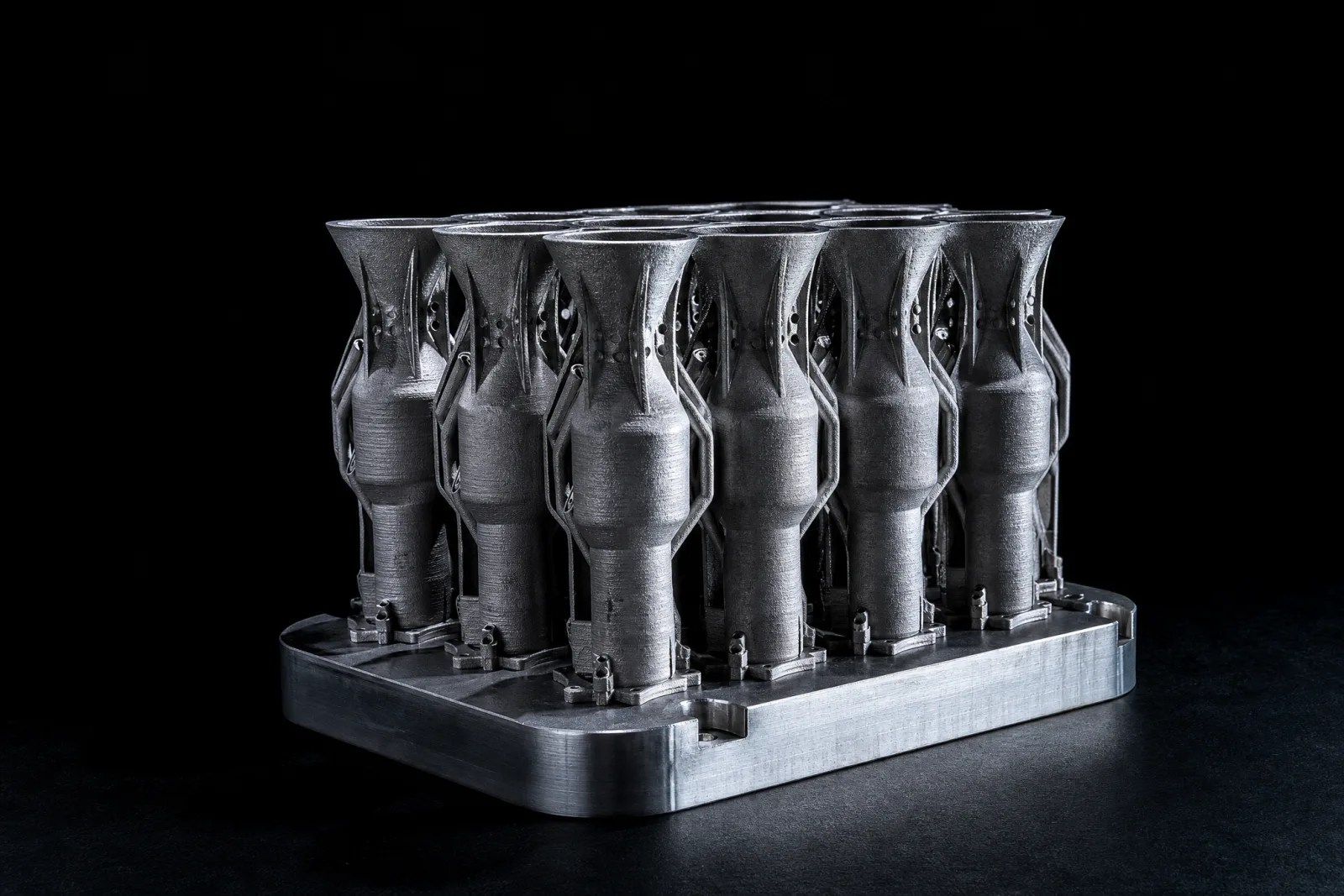
The GE LEAP Fuel Nozzle
This is the benchmark case for metal AM in aerospace. The LEAP engine fuel nozzle was originally an assembly of 20 individually machined and brazed components. In its AM form, it is a single cobalt-chrome part — printed via DMLS, with complex internal fuel passages that are impossible to produce any other way.
The results after millions of flight hours: 25% lighter than the conventionally manufactured predecessor, 5× more durable in service, and zero braze joints to inspect. The part is not a prototype. It flies on thousands of commercial aircraft every day.
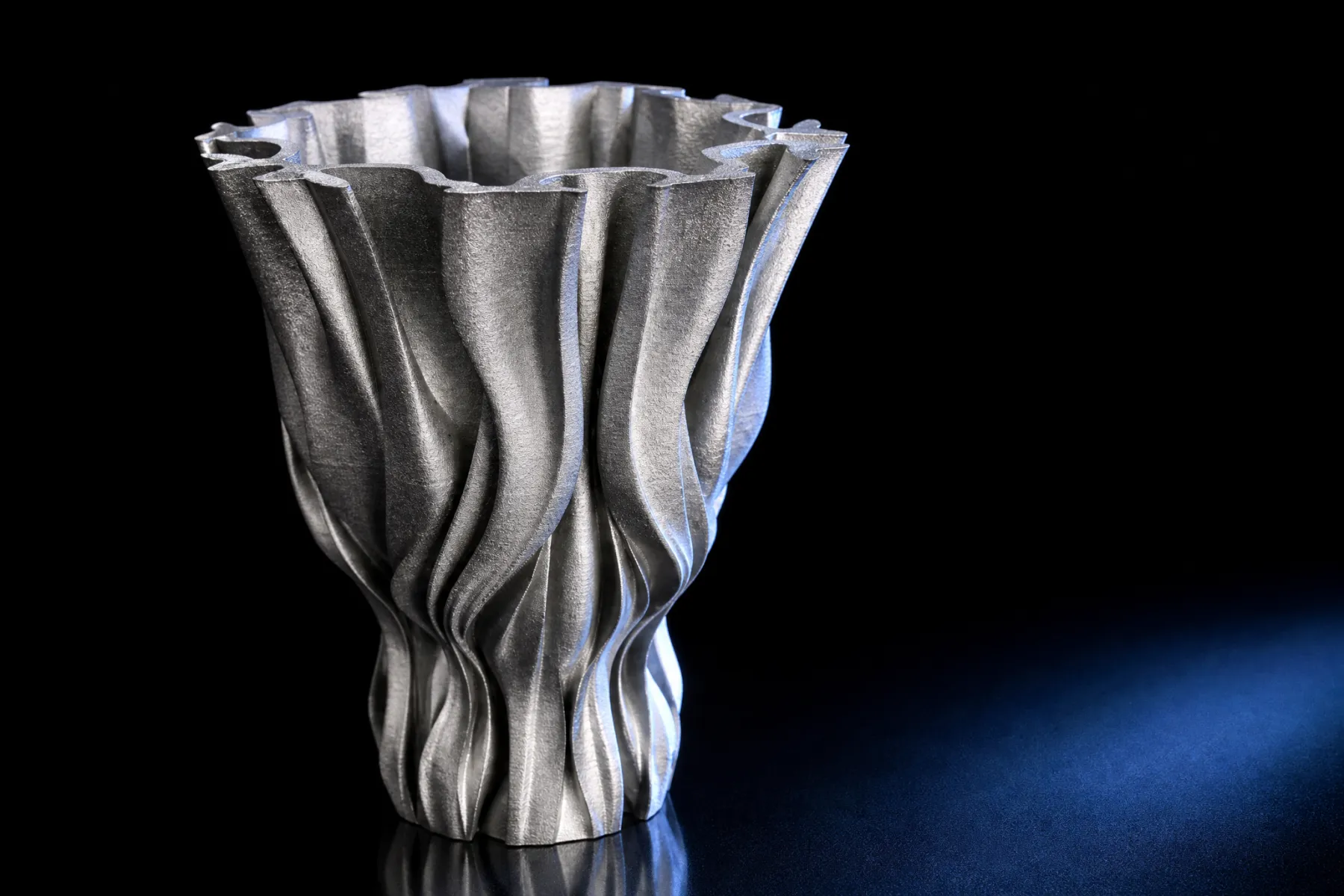
Beyond the Fuel Nozzle
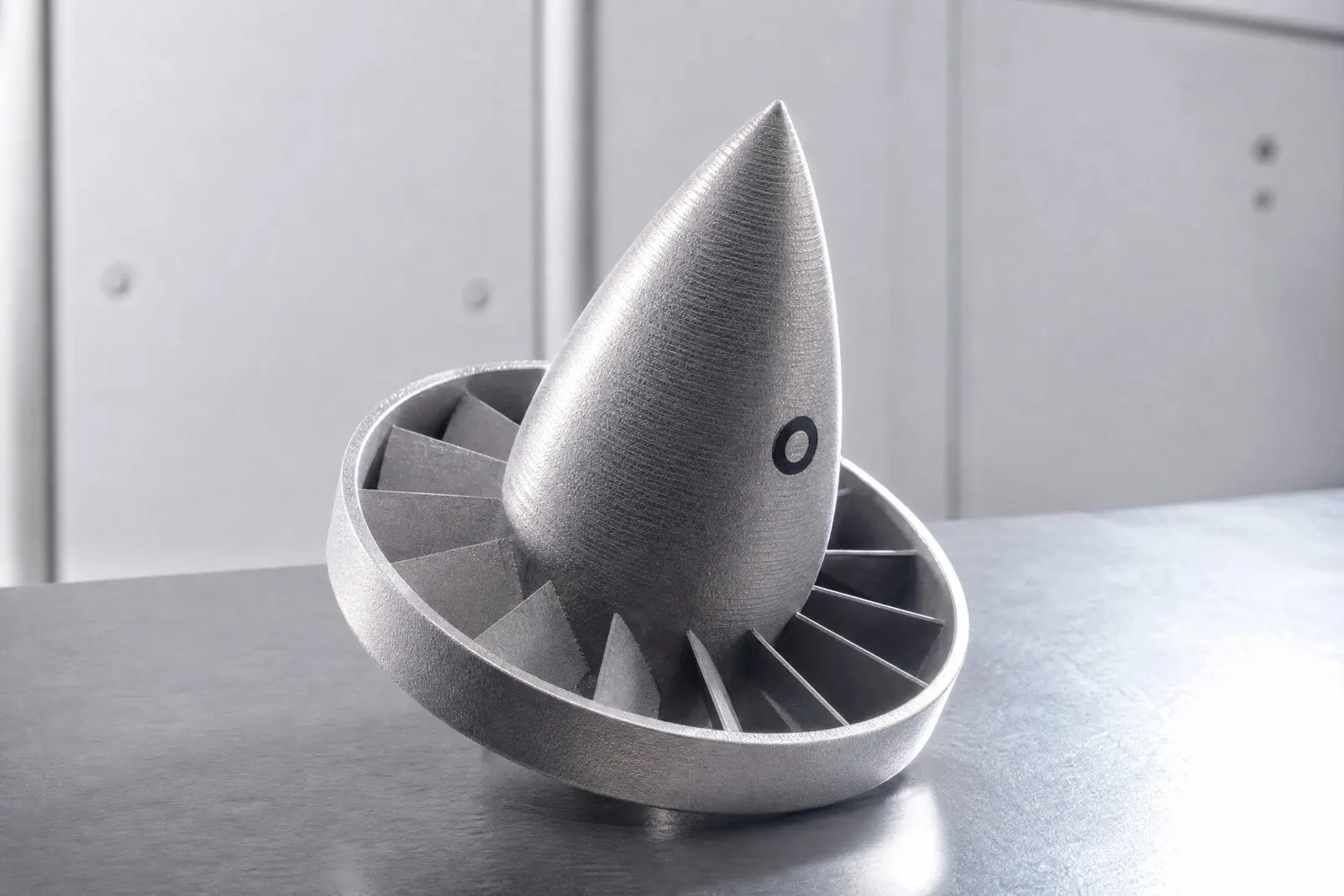
GE Catalyst Turboprop Engine
855 traditional parts consolidated into 12 AM components. Over one-third of the engine is now 3D printed and FAA type-certified. The engine is 10% lighter and 18% more fuel-efficient than competing turboprops — gains enabled by geometries only AM can produce.
GE Converts Castings to AM
In 2021, GE identified four existing cast engine components and converted them to L-PBF. Result: cost reduced 35% compared to investment casting. Hundreds more part numbers are now candidates for conversion. The bottleneck isn't technology — it's engineering bandwidth to re-qualify each part.
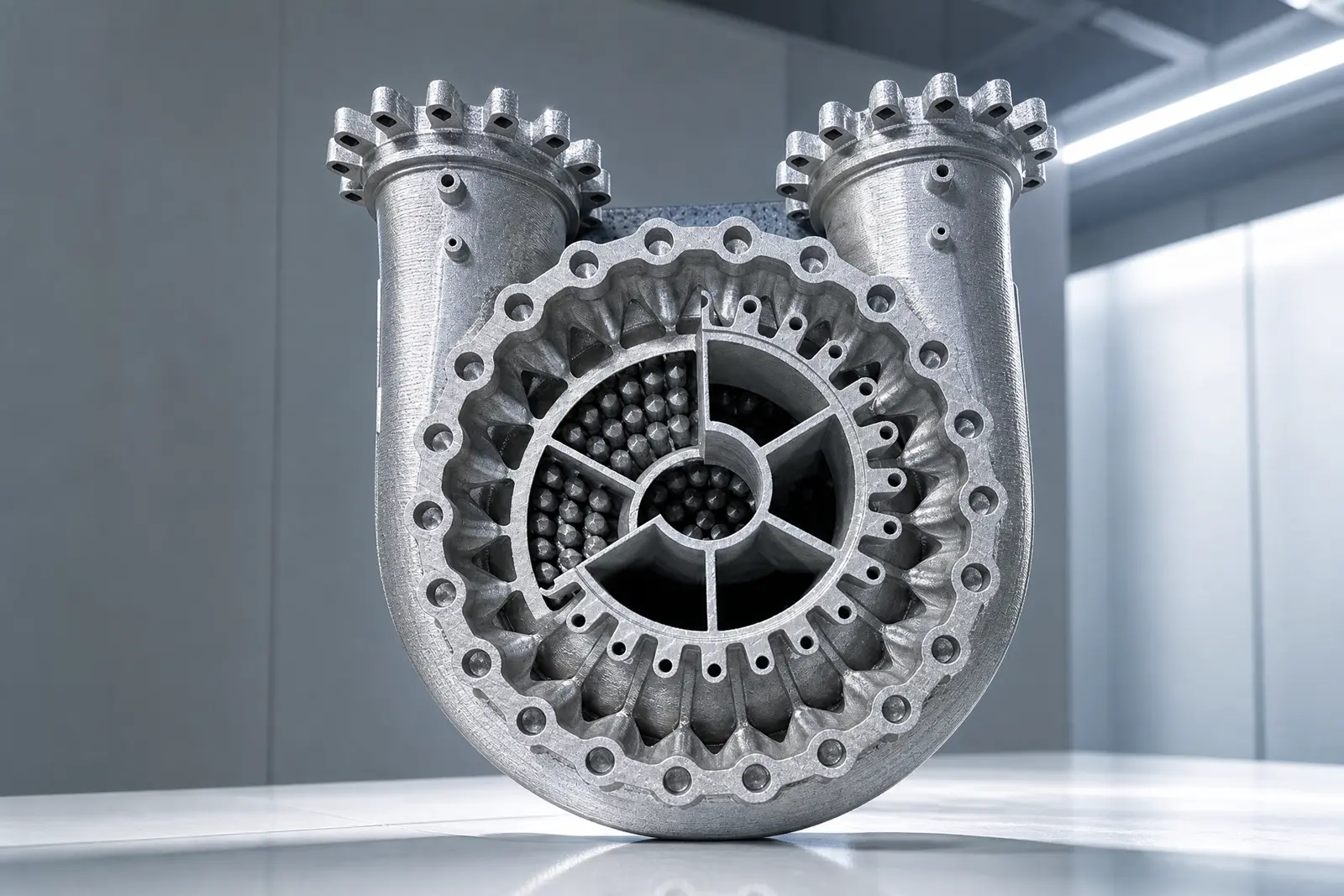
SpaceX SuperDraco Engine Chamber
The SuperDraco rocket engine combustion chamber is printed in Inconel as a single part on EOS DMLS — with integrated regenerative cooling channels that circulate propellant through the chamber walls. Previously this required multiple castings, machining operations, and braze assemblies. AM eliminates every joint. Every potential leak path. Every braze inspection point.
Why AM Wins for Aerospace
| Factor | Traditional (Casting + CNC) | Metal AM |
|---|---|---|
| Buy-to-fly ratio (Ti) | 10:1 to 20:1 (5–10% material used) | 1.5:1 to 3:1 (33–67% used) |
| Tooling cost | $30K–150K per mold | $0 |
| Tooling lead time | 8–16 weeks | 0 |
| Design change cost | New mold + re-qualify | CAD edit + re-print |
| Part consolidation | Assembly labor + fasteners + inspection | Single part, no assembly |
| Certification route | Established (casting specs) | Established (GE, SpaceX precedent) |
Our Aerospace Delivery
Aerospace builds at 3D Demiurge run on our in-house L-PBF line. First Article Inspection (FAI) per AS9102 is managed by our engineering team, and Zeming issues EN 10204 3.1 as the producing facility; we compile the full traceability and FAI package. Where AS9100D or NADCAP special-process approvals are contractually required, we state our certification status up front.
- Machine and powder lot named on quotation and in documentation
- Powder lot traceability maintained throughout
- Heat treatment per the applicable material specification (e.g. AMS 2759); furnace pyrometry per AMS 2750
- NDT (PT, RT/CT, UT) per drawing requirements
- Full FAI documentation managed by our engineering team
Request aerospace part review →
Aerospace FAQ
Can you support aerospace certification requirements?
Yes. Aerospace builds run on our in-house L-PBF line. FAI per AS9102 is managed by our engineering team, and Zeming issues EN 10204 3.1 as the producing facility. We hold ISO 9001, ISO 14001 and ISO 45001; where AS9100D or NADCAP certification is contractually required, we state our certification status up front so you can decide.
What alloys are available for aerospace?
Ti6Al4V Grade 5 (ASTM F2924), Ti6Al4V ELI (ASTM F3001), Inconel 718 (AMS 5662), Inconel 625 (AMS 5596), 17-4PH (UNS S17400 / ASTM A564), AlSi10Mg (ASTM F3318), and Cobalt Chrome (ASTM F3213). All verified by in-house XRF.
Can you handle ITAR/EAR-controlled parts?
Discuss export-controlled requirements at the quotation stage; we confirm the compliance scope in writing before any order is placed.
What's the lead time for aerospace parts?
Aerospace flight parts normally require the Certified tier: 4–8 weeks. FAI documentation adds approximately 1–2 weeks. HIP processing adds 3–7 days. Express delivery is available for simple, non-flight parts.