From Welded Tubes to Printed Frames
For decades, titanium bicycle frames were built the same way: cut round tubes to length, miter the ends to fit, weld them together. The tube profile is always round because tubes are drawn that way. Wall thickness is uniform. The welds are labor-intensive, skill-dependent, and create heat-affected zones with altered material properties.
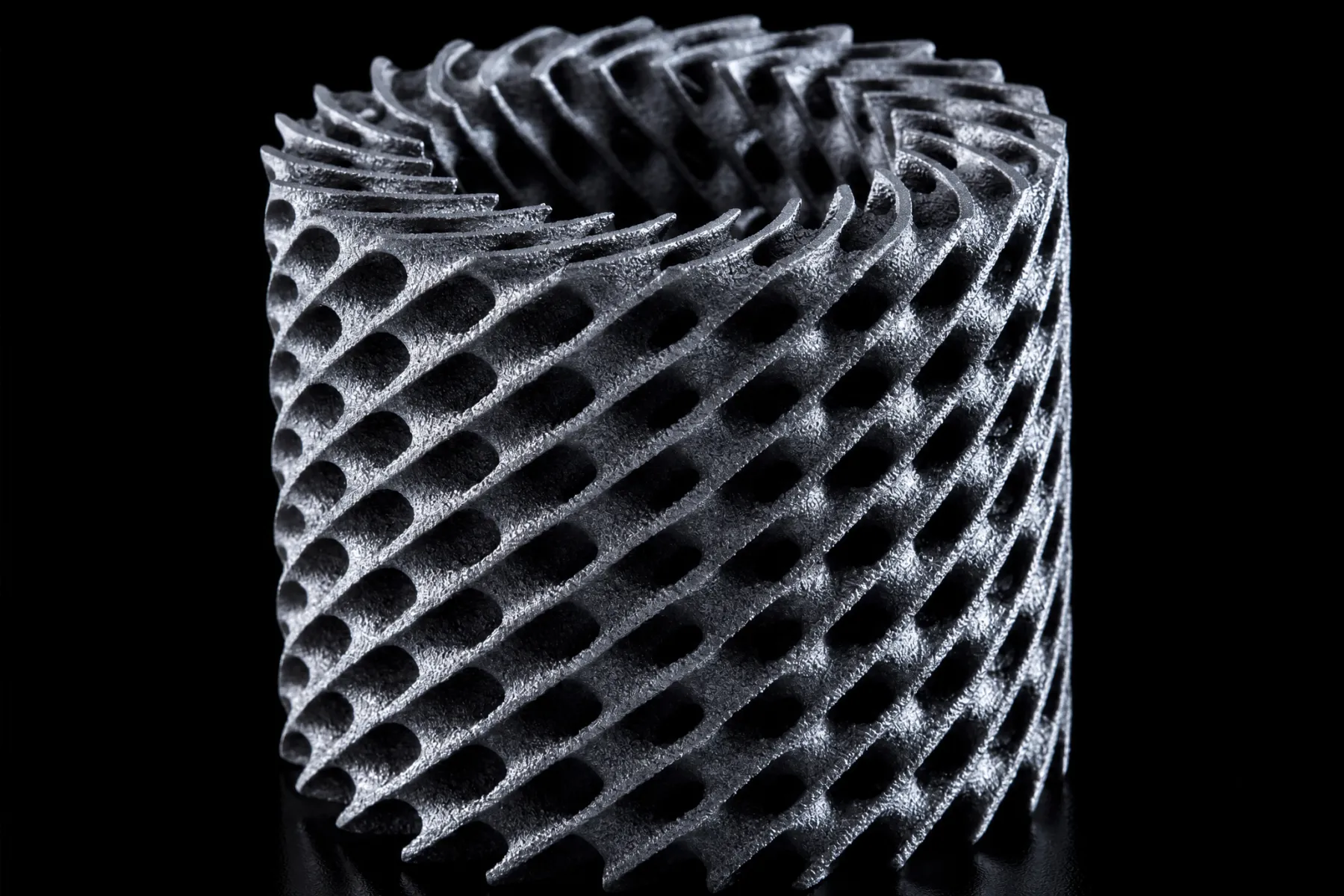
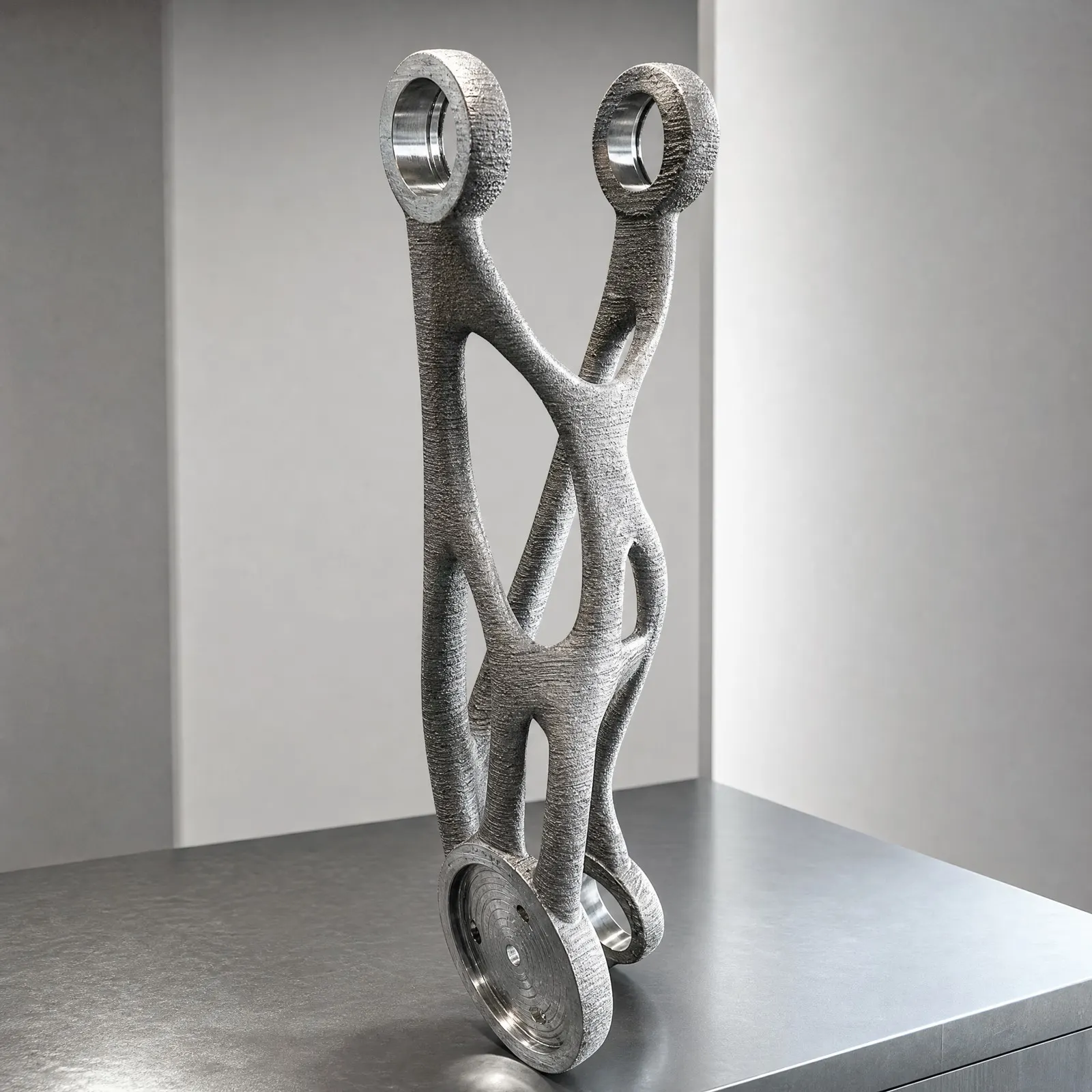
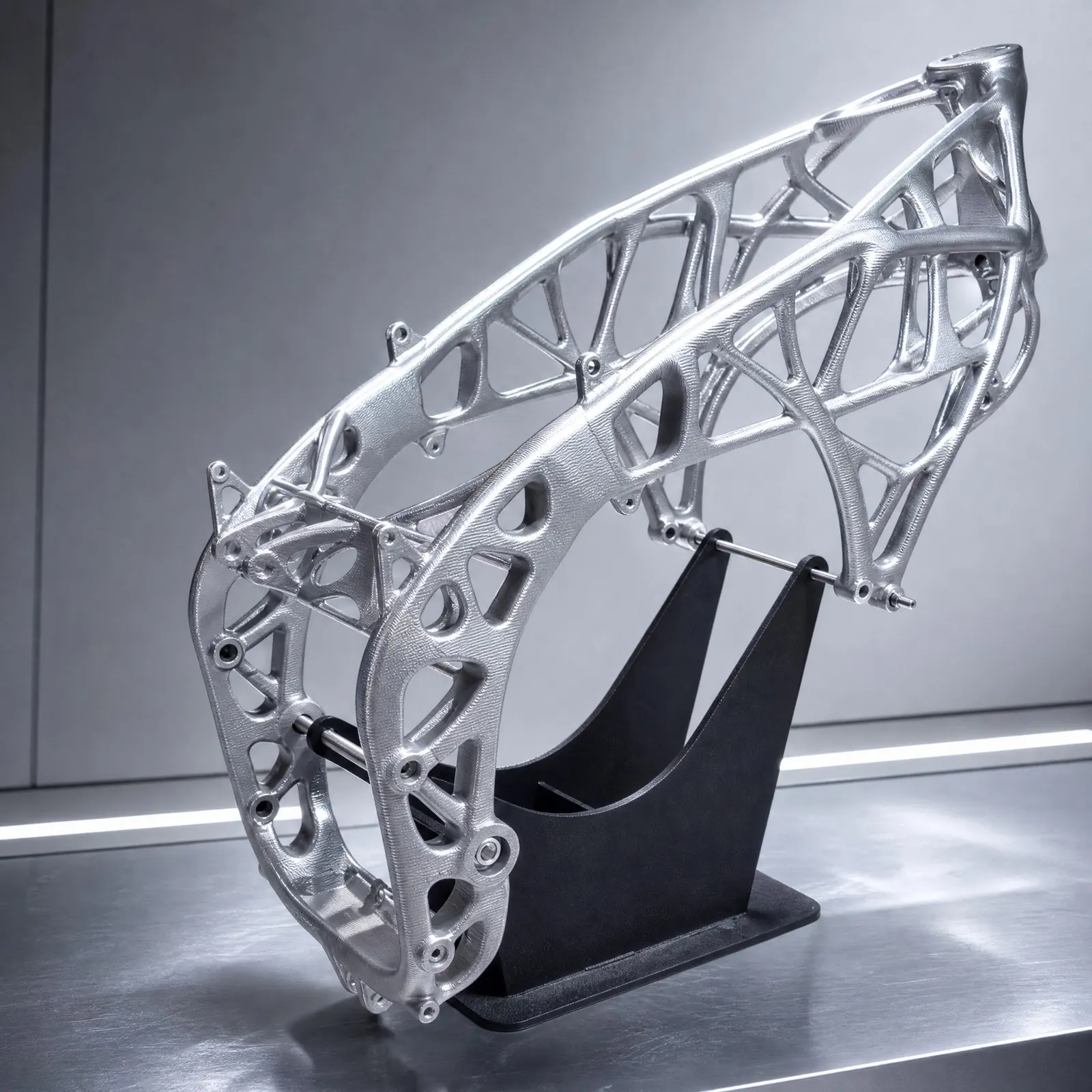
Metal AM breaks every one of these constraints. Cross-sections can be aerodynamic teardrops, not round tubes. Wall thickness varies continuously — thicker at high-stress junctions, paper-thin elsewhere. Joints are printed as part of the structure — no welds, no filler metal, no heat-affected zones. The result: lighter, more aerodynamic, more durable frames with geometries impossible in welded construction.

Who's Doing It
No.22 Bicycle Company launched the Reactor Aero — the world's first 3D-printed titanium aero road bike, with printed seat mast topper, head tube, bottom bracket, and dropouts. Price: approximately $15,000.
Möve Mobility + Eplus3D produced a titanium e-bike with 3D-printed lugs and bottom-bracket segments bonded to hydroformed titanium tubes — no welds, with the battery integrated into the down tube.
Hanglun Technology — reportedly the world's largest titanium bicycle manufacturer — targets 50,000 metal AM parts per year using Farsoon systems. This is not prototyping. This is production.
J.Laverack + Aston Martin created the .1R — an ultra-premium custom titanium road bike with 3D-printed titanium lugs produced on a Renishaw RenAM 500Q.
Which Bike Parts Make Sense to Print
A full frame won't fit today's L-PBF build envelopes — but the parts that define the frame's character are exactly what AM is for:
| Part | Why AM fits | Typical alloy |
|---|---|---|
| Lugs & joint segments | Organic load-path shapes bonded to hydroformed tubes — no welds, no mitering | Ti6Al4V |
| Bottom bracket shell | High-load junction; internal cable and battery routing built in | Ti6Al4V |
| Head tube & dropouts | Complex interface geometry, custom per frame size at zero tooling cost | Ti6Al4V |
| Seat mast topper & clusters | Aero-profiled, rider-specific geometry in one piece | Ti6Al4V |
| Stems, cranks, seatposts | Batch sizes too small for casting tooling; shapes CNC can't reach | Ti6Al4V · AlSi10Mg |
Surface Finish Options
| Finish | Roughness | Look & use |
|---|---|---|
| As-built | Ra 8–20 µm | Visible layer texture — engineering parts, hidden surfaces |
| Bead blasted | Ra 3–8 µm | Uniform satin matte — the standard premium AM look |
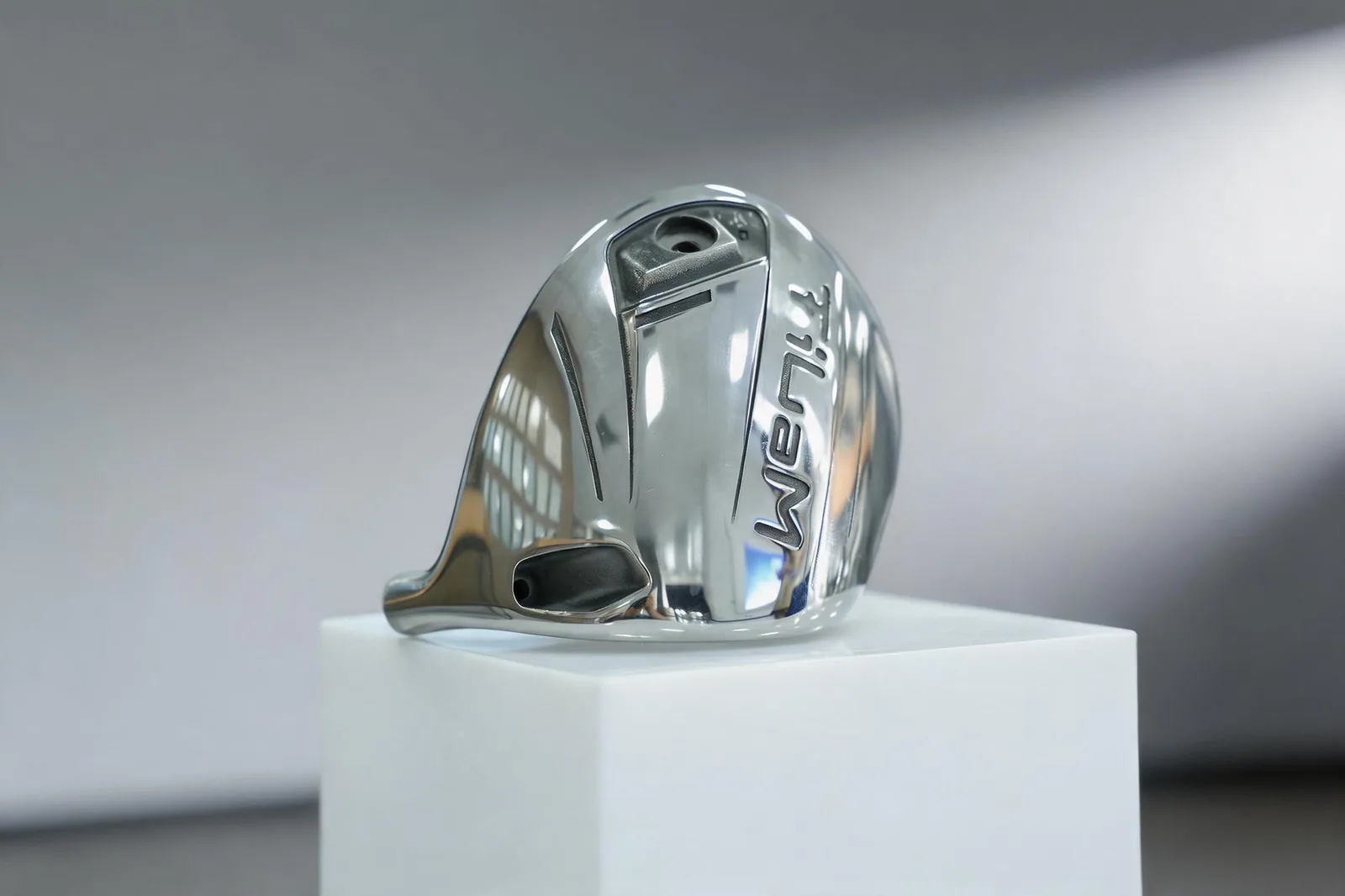
| Polished | Ra <1 µm | Mirror finish for show surfaces and jewelry-grade parts |
Custom Geometry at Zero Tooling Cost
Custom bicycle geometry has always been expensive because it means custom tooling — different jigs, different tube sets, different miters per size. AM eliminates tooling. A 52 cm frame and a 58 cm frame are just different CAD files sent to the same machine. The per-size cost is identical. This opens the door to truly custom production at prices competitive with high-end stock frames.
For component manufacturers — stems, cranks, seatposts, handlebars — the value proposition is the same: complex organic shapes that CNC cannot produce, at batch sizes that don't require casting tooling amortization.

Bicycle AM FAQ
Can you print a complete bicycle frame?
Our in-house L-PBF build envelopes cover the components that define a frame — lugs, dropouts, bottom bracket shells, seat clusters. A full frame exceeds any L-PBF envelope today. For very large single-piece structures, DED/WAAM may be available through our qualified partner network. Build envelopes are increasing, and full-frame printing remains under development at several machine vendors.
What surface finish can I expect on bike parts?
As-built: Ra 8–20 μm. Bead blasted: uniform satin, Ra 3–8 μm. Polished: mirror finish possible, Ra <1 μm. Most bike brands displaying raw AM parts use bead-blasted or lightly polished finishes to show the additive process while delivering a premium look.
Is AM titanium as strong as wrought titanium?
After HIP and heat treatment, AM Ti6Al4V meets the ASTM F2924 requirements and is comparable to wrought annealed Ti6Al4V. Fatigue performance with HIP is comparable. The key is proper post-processing — stress relief and HIP are not optional for structural bike components.
Can you match custom geometry from a bike fit?
Yes. Send us the fit data (stack, reach, seat angle, head angle, etc.) and we'll incorporate it into the DfAM review. Custom geometry per rider is one of AM's strongest advantages — no tooling means no per-size cost penalty.