Why Weight Matters More Than Part Cost
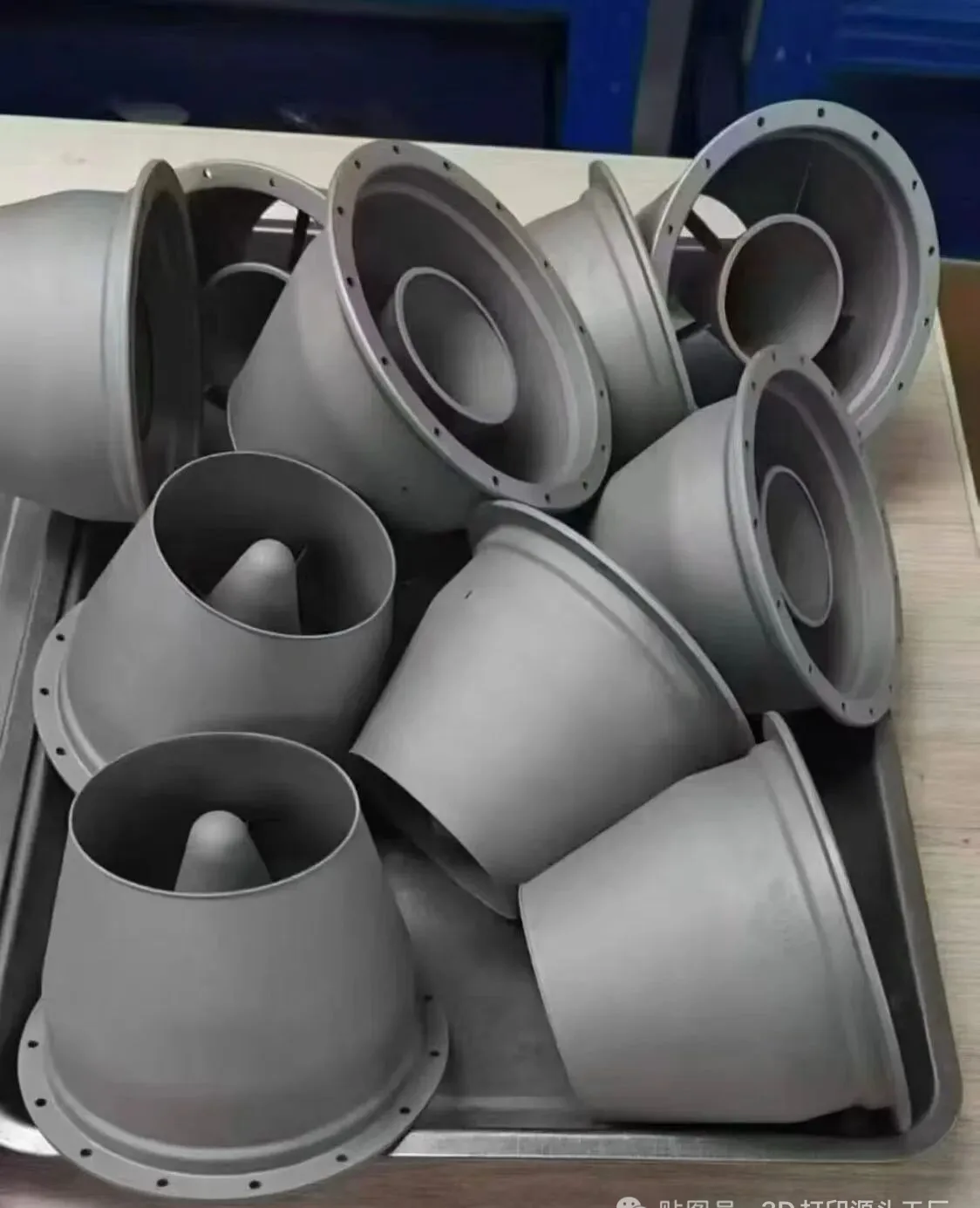
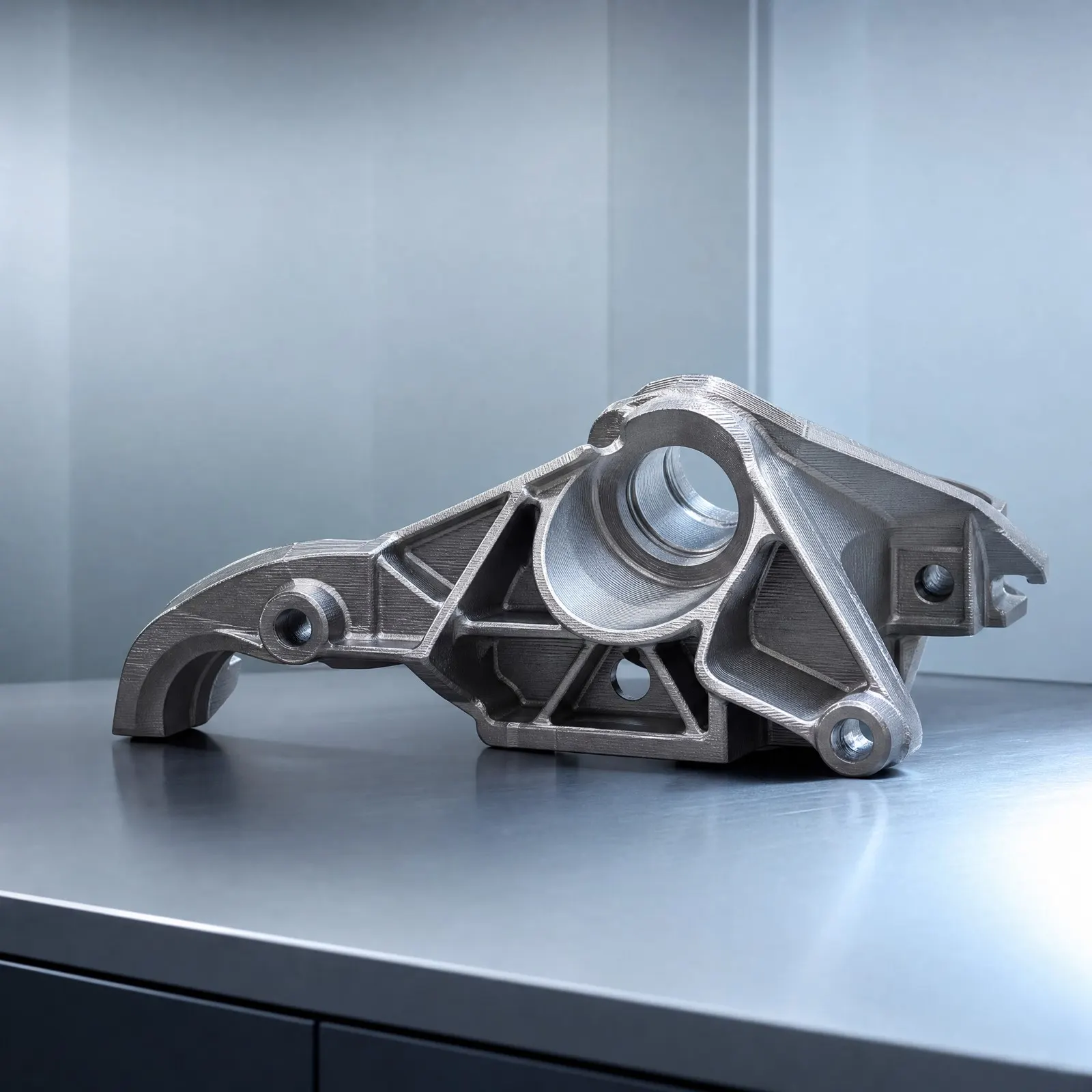
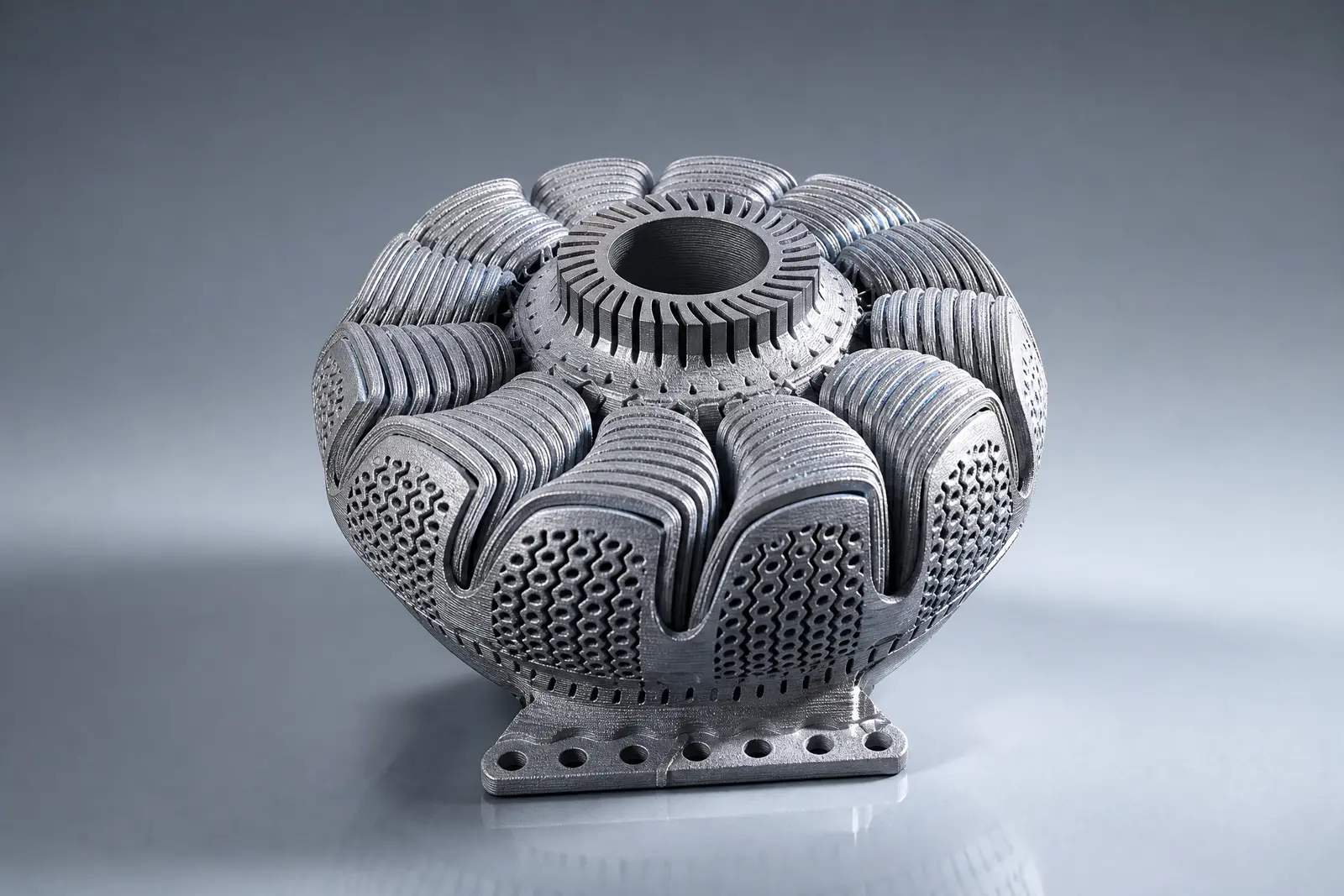
Every gram of structural weight on a drone is a gram subtracted from payload, flight time, or battery. Topology optimization software distributes material exactly where stress paths demand it — producing organic, bone-like structures that are profoundly lighter than anything a machinist would design. But there's a catch: these shapes are impossible to CNC machine. Undercuts, internal lattices, variable wall thickness — subtractive tools simply cannot reach them.
Metal AM prints them directly. The cost of the part matters less than the value of the weight saved. A bracket that costs $200 but saves 80g vs a $50 CNC bracket is the right choice when every gram buys seconds of flight time.
Venom: 71 Days Concept-to-Flight
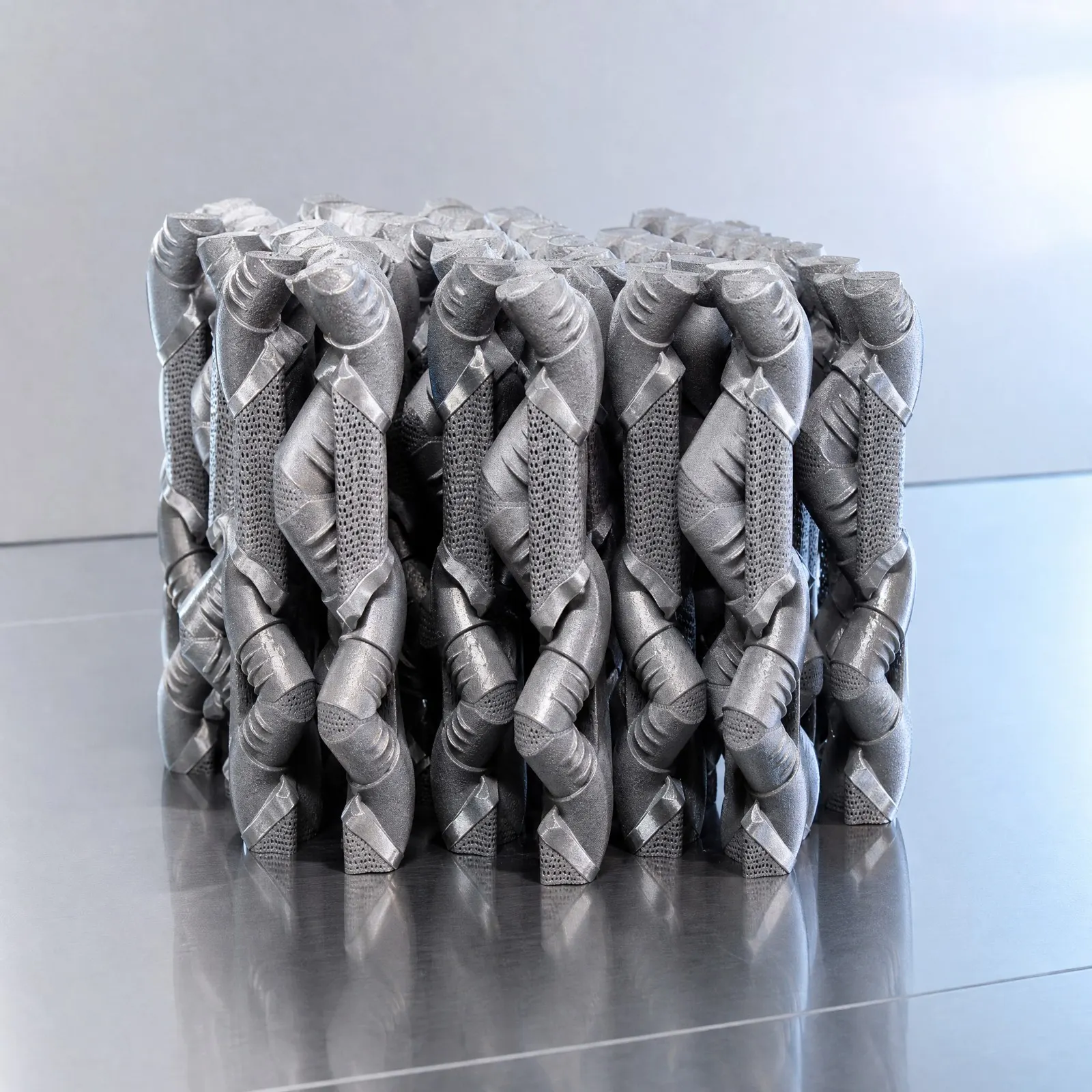
Divergent Technologies partnered with Mach Industries to build the Venom autonomous attack drone. Using metal AM and their proprietary assembly system, the team went from concept to a flyable prototype in 71 days — a timeline not achievable with traditional aerospace tooling, casting, and assembly workflows.
Divergent's approach uses AM not just for individual parts but also as part of a digital production system that eliminates hard tooling entirely. The result: iteration cycles measured in days, not months. Design → print → test → redesign → print again — all in the time it would take a casting house to produce the first mold.
The AM Advantage for UAV Programs
| Factor | Traditional | Metal AM |
|---|---|---|
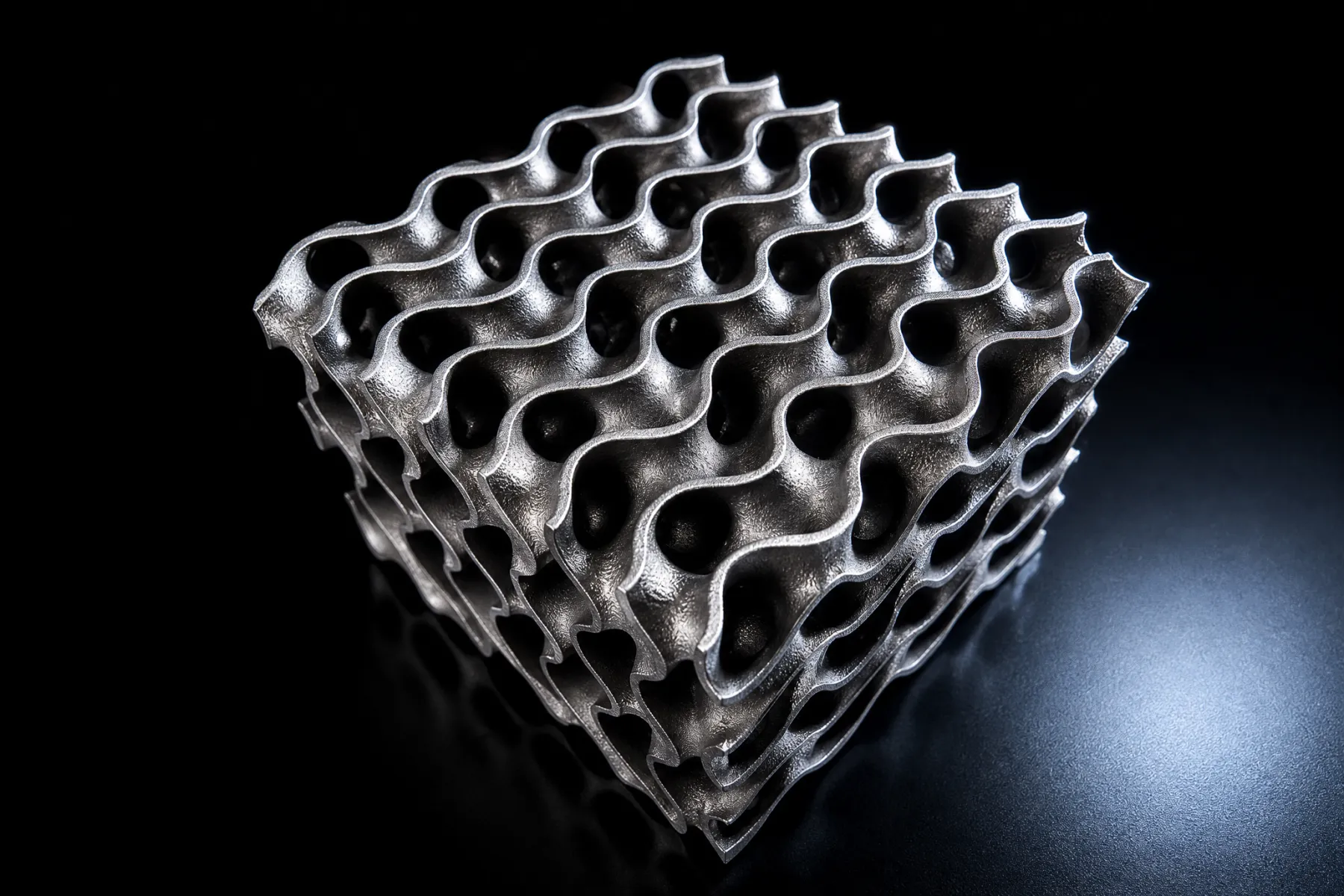
| Structural weight | Baseline | −40 to −70% via topology optimization |
| Part count | Dozens assembled | Single consolidated part |
| Development iteration | Weeks (new tooling) | Days (CAD → print) |
| Production MOQ | Hundreds (tooling amortization) | 1 (no tooling) |
| Geometric freedom | Limited by tool access | Near-unlimited |
| Express delivery | Not possible | 3–5 days |
UAV FAQ
Can you do topology optimization for my drone part?
Standard DfAM review — assessing your existing design and suggesting minor improvements — is included. Full topology optimization, generative design, or lattice engineering is a separate engagement quoted at $80–150/hour. We'll tell you which approach your part needs.
Which alloy is best for drone structures?
AlSi10Mg is the go-to for lightweight drone structures — it's the lightest AM alloy we offer. Ti6Al4V where higher strength or temperature resistance is needed. 316L for corrosion-prone environments (maritime drones). We'll recommend based on your loads and environment.
How fast can you deliver prototype drone parts?
Express delivery in 3–5 days for simple geometries in common alloys. This covers build + stress relief + basic support removal + visual inspection. No CNC finish. Perfect for form/fit checking and initial testing.
Can you consolidate my multi-part assembly into one AM part?
Yes — this is one of AM's strongest value propositions. Send us your assembly CAD or a description of the assembly, and our DfAM review will identify consolidation opportunities. Typical results: 3–20 parts merged into 1, with reduced weight, no fasteners, and fewer failure points.