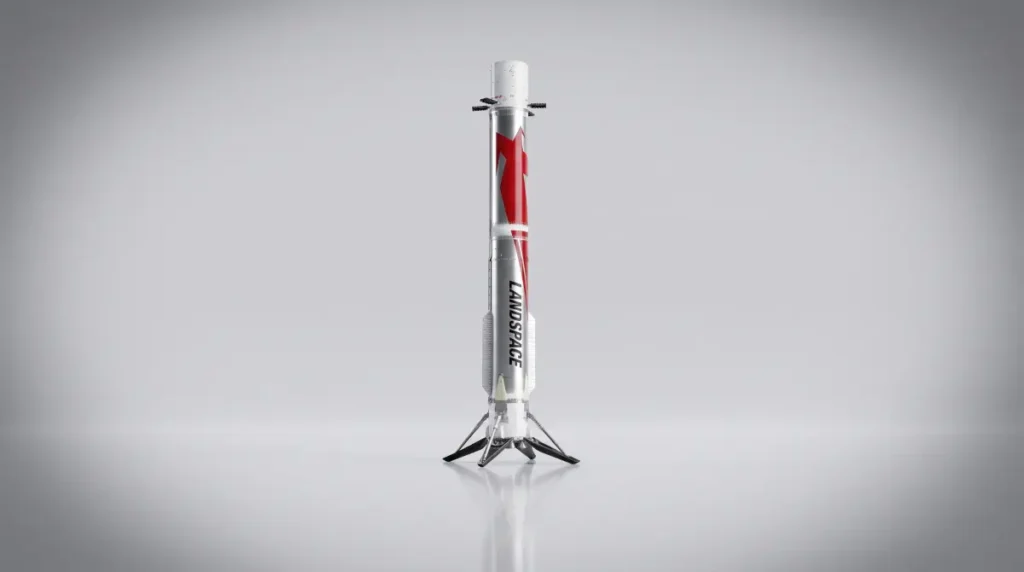
Roughly 70% of the parts in the Tianque-12B engine that powers LandSpace’s Zhuque-3 are metal 3D printed — about 30% fewer components than an equivalently capable machined-and-welded design.[3][8] That is the highest additively manufactured share publicly disclosed for any orbital-class rocket engine in China, and it is the manufacturing story behind the vehicle that performed China’s first land recovery of an orbital-class booster.[2][3] Here is the component-by-component breakdown: which parts are printed, in which alloys, and what the published numbers say about weight, thrust and lead time.
Quick answer: which Zhuque-3 parts are metal 3D printed?
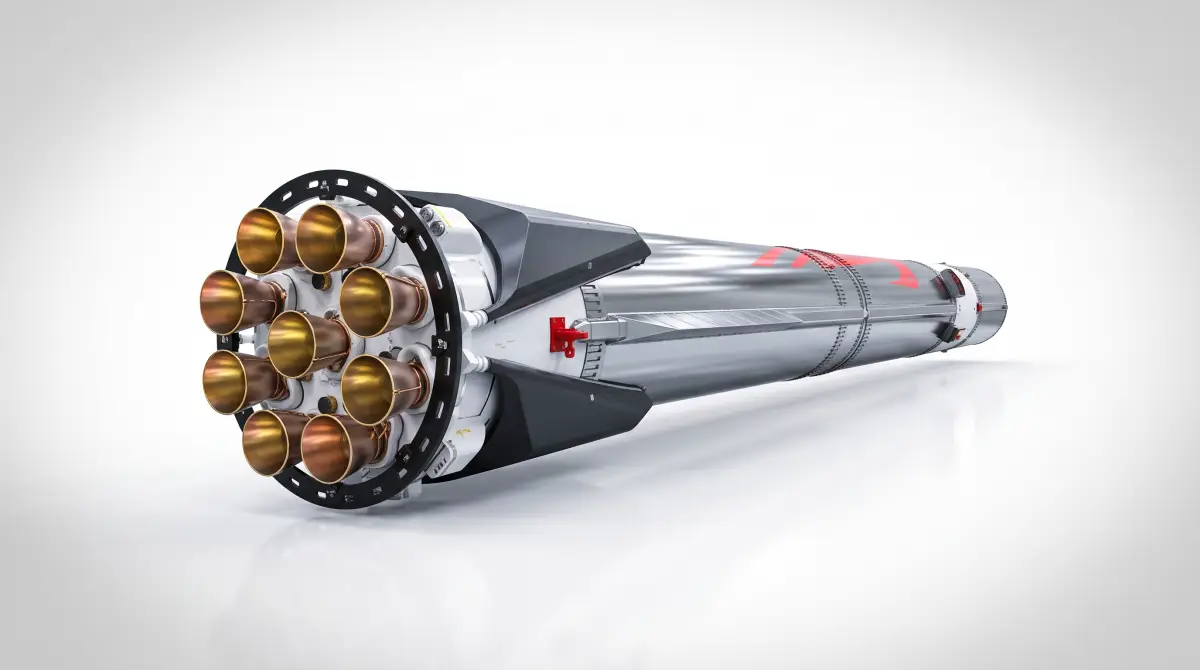
The printed parts concentrate in the hot section of the Tianque (TQ-12) methalox engines, produced by laser powder bed fusion (PBF-LB/M):
- Gas generator body and combustion chamber — nickel-base superalloy, printed as one-piece forms that eliminate welded joints.[6][9]
- Injector and regenerative cooling channels — superalloy and copper-alloy structures with the cooling circuit integrated into the wall instead of assembled from separate tubes.[8][9]
- Turbopump housings and impellers — titanium alloys (TC4/TA15-grade, and AM-dedicated grades such as TA19) where stiffness-to-weight drives the design.[8]
- Brackets, igniter mounts and complex freeform sections — stainless steel and superalloy, including a free-body section with an internal cooling structure that traditional fabrication could not reliably produce.[4][5]
At vehicle level, analyst estimates put additive manufacturing at 20–30% of the whole rocket by application share, with the engine carrying the overwhelming majority of it.[8]
Why a reusable methalox rocket is AM-native
Zhuque-3 is built around choices that only make sense if manufacturing is cheap and repeatable: a stainless-steel airframe instead of aluminum-lithium, liquid methane that burns clean enough to skip de-coking between flights, and nine first-stage engines flown in parallel so volume drives cost down.[1][9] The stage is designed for up to 20 reuses, which converts the engine from a bespoke aerospace artifact into a production part.[4]
Rocket engines are exactly the geometry additive manufacturing was made for. Turbopump housings, gas generators, thrust chambers and nozzles laced with regenerative cooling channels are irregular, internal-heavy parts that conventional routes build as many pieces and dozens of welds. PBF-LB prints them as single pieces with the cooling channels already inside — fewer welds, fewer leak paths, shorter cycle, and design freedom to put wall thickness only where the load case demands it.[5][9] LandSpace has leaned on this since 2019, when it began qualifying metal AM for engine components with Xi’an Bright Laser Technologies (BLT).[5]
The printed components, part by part
Gas generator and combustion chamber
BLT’s 2025 interim report names the collaboration at company-announcement level: it printed the gas-generator body and combustion chamber for the Tianque engine family and supported Zhuque-3’s first large-scale vertical take-off and landing flight test, moving those parts from engineering validation toward batch production.[6][9] These are nickel-superalloy parts working at the thermal extreme of an 80-ton-class methalox engine — the canonical use case for PBF-LB superalloy.
Injector and regenerative cooling channels
The injector atomizes and mixes propellant through hundreds of fine passages; the chamber wall carries the regenerative cooling circuit that keeps it alive. Chinese industry coverage of the program describes superalloy and copper-alloy structures with the cooling channels printed integrally, and topology-optimized walls for uniform thickness — the same design logic SpaceX popularized and Relativity Space took to its conclusion.[8][9] Copper alloy is the hard part of that story: high reflectivity made it a poor laser absorber for years, and its arrival in production engines tracks directly with green/red laser advances in powder-bed machines.
Turbopump housings and impellers
The turbopump is where stiffness-per-kilogram pays for itself, and the Chinese supply chain around Zhuque-3 points at titanium: TC4/TA15-class alloys for housings and impellers, with AM-dedicated high-temperature titanium grades (TA19-type) developed specifically for printed engine hardware.[8] Printed impellers also arrive balanced and near-net, shaving the machining time a cast-and-machine route spends on a part that spins at tens of thousands of RPM.
Brackets, igniter mounts and the freeform cooled section
The earliest disclosed parts were the unglamorous-but-critical ones: joint elements, igniter mounts and a “free-body section” with a complex internal cooling structure that conventional fabrication could not meet without quality risk. Printing integrated the cooling structure in one pass and protected the chamber casing from erosion — a quiet example of AM winning on reliability, not just cost.[4][5]
| Component | Alloy family | Why AM wins here | Source tier |
|---|---|---|---|
| Gas generator body | Nickel superalloy | One-piece hot-section form, welds removed | Supplier announcement[6][9] |
| Combustion chamber | Nickel superalloy / Cu-alloy wall | Integrated regenerative cooling channels | Supplier announcement[6][8] |
| Injector | Superalloy / Cu-alloy | Hundreds of fine passages in one build | Industry coverage[8] |
| Turbopump housing, impeller | Ti alloys (TC4/TA15/TA19) | Stiffness-to-weight; near-net rotating part | Industry coverage[8] |
| Igniter mounts, brackets, freeform cooled section | Stainless / superalloy | Complex internal cooling unmakeable by weld assembly | Supplier case study[4][5] |
The numbers: thrust, weight and lead time
| Metric | Value | Attribution |
|---|---|---|
| Printed share of TQ-12B parts | ~70% | 2026 disclosure[3][8] |
| Component count vs machined design | −30% | Same disclosure[3] |
| TQ-12B thrust vs previous variant | +25% | Same disclosure[3] |
| TQ-12A vs TQ-12 (earlier evolution) | +9% thrust, +40 m/s Isp, −100 kg | Wikipedia, program statements[7] |
| AM share of whole vehicle | 20–30% | Analyst report[8] |
| Benchmark — Raptor 3 vs gen-1 | +51% thrust, −7% mass | MIIT-affiliated industry analysis[8] |
| Benchmark — Skyroot printed engine | −50% mass, −80% lead time | Industry press[8] |
One honest caveat: LandSpace has not published a part-level weight-reduction percentage for Zhuque-3, so any single “AM saved X% on this engine” figure you meet is an extrapolation. The clean public numbers are the 100 kg saved between TQ-12 and TQ-12A, the 70%/30%/25% triple for TQ-12B, and the benchmarks above.[7] On lead time, LandSpace’s own statement is qualitative but pointed: metal AM was chosen to cut production cycles, avoid tooling and support rapid design iterations — the same reason BLT’s machines (BLT-S310/S400-class PBF-LB systems, with builds up to 400 mm) ran the parts.[4][6][10]
Materials map: what these parts are printed from
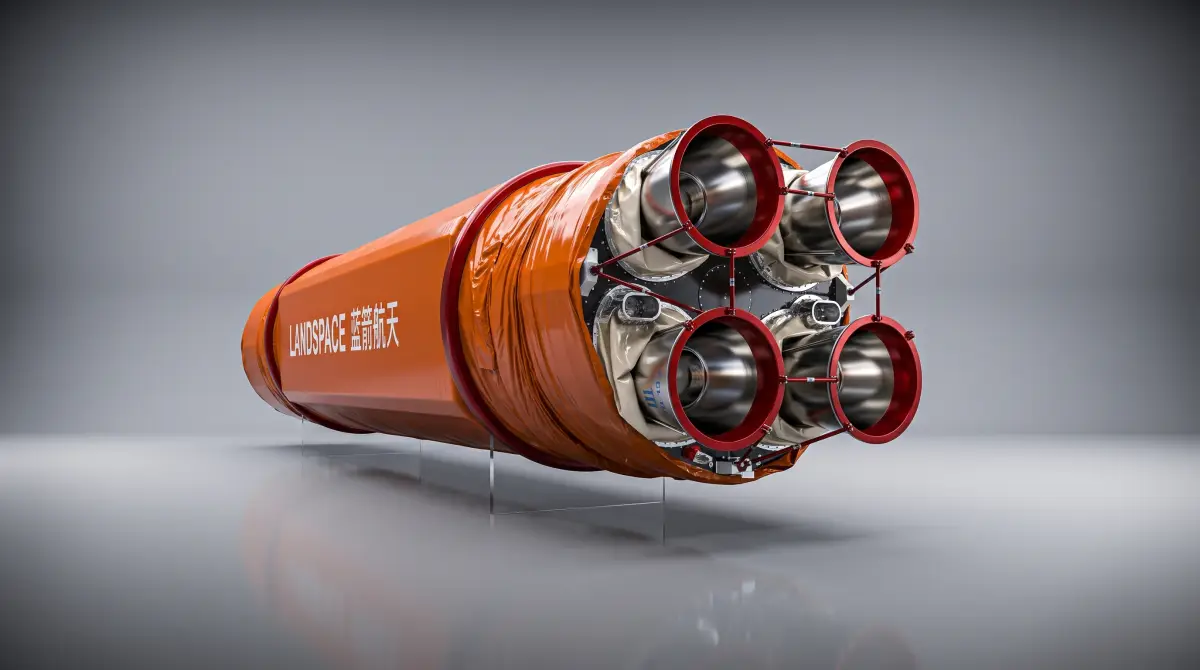
The alloy families on Zhuque-3 are the same four pillars of aerospace PBF-LB you see on any serious materials shelf: nickel superalloys for the hot section (the classic Inconel 718 vs 625 trade-off applies directly), stainless steel for ducts, brackets and — at vehicle scale — the airframe itself, titanium alloys for rotating and stiffness-critical hardware, and copper alloys where heat flux rules. If you are specifying a part today, the Zhuque-3 story maps cleanly onto material selection we apply on customer work: superalloy, stainless, titanium and aluminum PBF-LB alloys for structural and hot parts, with copper reserved for machines equipped with the right laser source.
What Zhuque-3 teaches buyers of metal AM parts
Three lessons transfer from orbital class to your purchase order. First, consolidate aggressively: the 30% component-count cut on TQ-12B is part consolidation at program scale — every removed weld is removed cost and removed leak path. Second, print the function, not the geometry: the freeform cooled section won because the cooling circuit was designed as a printing problem, not machined around afterwards. Third, qualify the powder chain, not just the machine: aerospace AM runs on certified powder lots, documented builds and MTC-backed delivery — the same discipline we run on our five in-house AM systems with CNC machining, finishing and inspection under one roof, under an ISO 9001 quality system (shared with our parent Zeming). We do not claim aerospace accreditation we do not hold; we claim the process control that makes your FAI package boring. Aerospace parts are one of our core application tracks.
FAQ
What percentage of the Zhuque-3 engine is 3D printed?
About 70% of parts on the full-configuration TQ-12B, with earlier Tianque variants reported at 60–70%; at whole-vehicle level, analyst estimates put AM at 20–30% of the rocket.[3][8]
Which materials are used in Zhuque-3’s printed parts?
Nickel superalloys for the gas generator and chamber, copper alloys for hot cooling structures, titanium alloys (TC4/TA15/TA19-type) for turbopump hardware, and stainless steel for brackets and fittings.[8][9]
Who prints the parts?
Xi’an Bright Laser Technologies (BLT) is named at company-announcement level for the Tianque gas generator and chamber, a collaboration running since 2019 on PBF-LB machines of the BLT-S310/S400 class.[5][6]
How much weight does 3D printing save on Zhuque-3?
LandSpace has not published a part-level percentage. Public figures: TQ-12A is 100 kg lighter than TQ-12; as benchmarks, Raptor 3 cut 7% of mass over gen-1 and Skyroot reports a 50% mass cut on its printed engine.[7][8]
Is 3D printing faster than machining for rocket engine parts?
For internal-heavy hot-section parts, yes by a wide margin: no tooling, no weld-and-inspect loops, channels printed in place. LandSpace cites shortened production cycles and faster iteration; industry benchmarks run up to 80% lead-time reduction on printed engines.[4][8]
Can a contract manufacturer print the same alloys today?
The superalloy, stainless, titanium and aluminum families are standard production PBF-LB materials; copper alloys need machines with suitable laser sources. The design logic — consolidation, integrated cooling, topology-optimized walls — is available to any buyer with a CAD file and a sensible spec.
Upload your part — get an itemized AM quote →
References
- Wikipedia. “Zhuque-3.” Link (accessed August 19, 2026).
- Reuters. “China’s LandSpace fails to complete reusable rocket test.” December 3, 2025. Link.
- Pandaily. “LandSpace’s Zhuque-3 Y2 Faces Critical Technical Hurdles Ahead of Recovery Attempt.” June 2026. Link.
- 3DPrint.com. “BLT’s 3D Printing Powers LandSpace’s Rocket Hopper Test in China.” Link (accessed August 19, 2026).
- VoxelMatters. “BLT enables LandSpace’s ZQ-3 to ace reusable rocket landing.” Link (accessed August 19, 2026).
- BLT (Bright Laser Technologies). “BLT’s Additive Manufacturing Plays Key Role in Successful Launch of Landspace Zhuque-2 (ZQ-2 Y2).” Link (accessed August 19, 2026).
- Wikipedia. “TQ-12.” Link (accessed August 19, 2026).
- 36Kr. “China’s Commercial Rocket 3D Printing Progress Bar.” July 2026. Link.
- Faxian Gongchang Industry Research. “Catching Itself: Zhuque-3 and the Industrial Chain Behind China’s Reusable Rocket.” 2026. Link.
- TCT Magazine. “BLT metal 3D printing aids successful Landspace launch mission.” Link (accessed August 19, 2026).