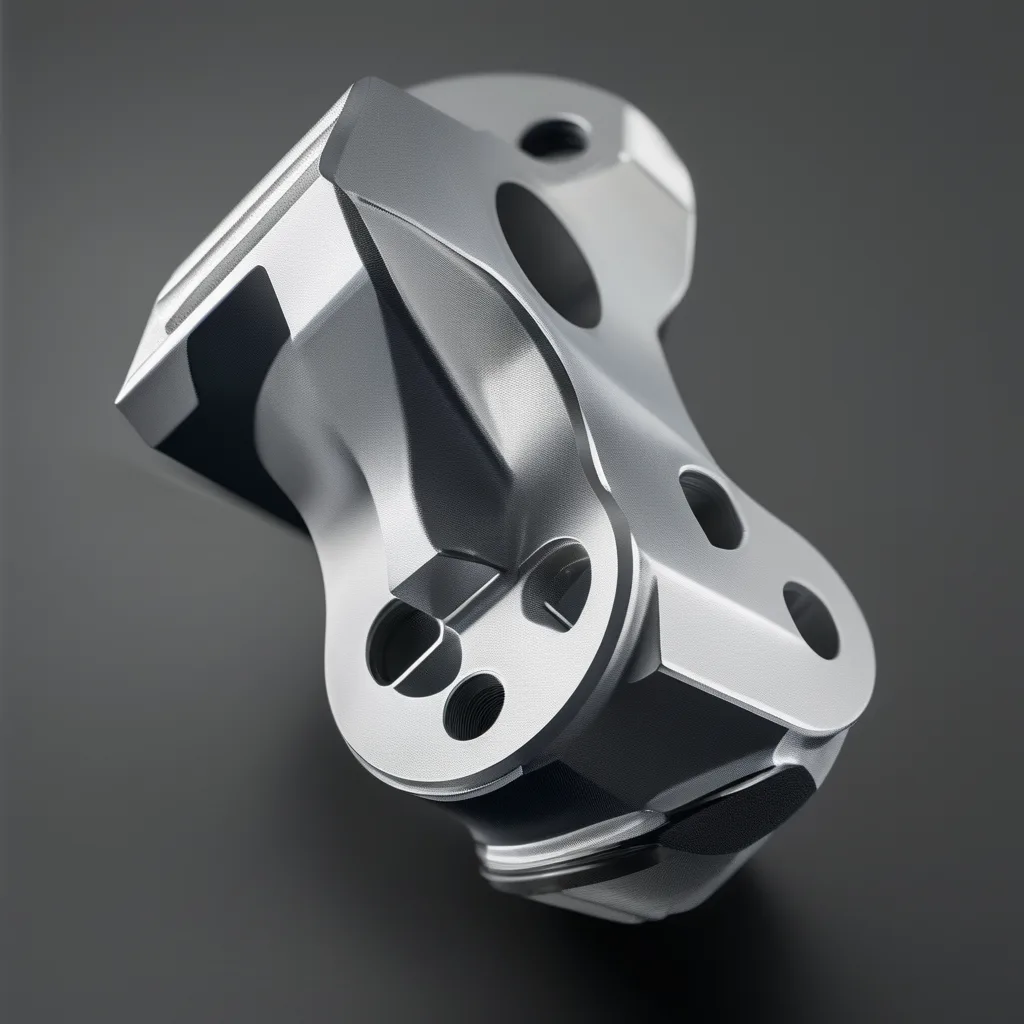
On a typical laser powder bed fusion part, 30–50% of the final cost happens after the build ends. At single-piece volumes the share can approach two-thirds; at batches of ~50 it settles toward 40–45% as fixtures and setups amortize.[4] That is why two quotes for “the same printed part” can differ by half — the difference is rarely the printer, it is the six post-processing stages behind it. Here is what each stage actually costs, and where buyers can legally shave it.
The six stages that price your part
| Stage | What it does | Typical share of post spend | What moves the number |
|---|---|---|---|
| Support & powder removal | Decoupling, support cutting, internal powder evacuation | 5–10% | Internal channels double the labor |
| Stress relief / heat treatment | Removes residual stress; sets properties (aging for 17-4PH, IN718) | 5–10% | Furnace batch size; vacuum vs argon |
| HIP (optional) | Closes internal porosity for fatigue-critical parts | 0–15% | Only when the spec demands it[3] |
| CNC machining | Datums, seals, threads, tight-tolerance surfaces | 30–50% | Number of setups; hardened alloys |
| Surface finishing | Media/vibratory, blasting, polishing, passivation | 10–20% | As-printed Ra ≈ 6–15 µm vs your target |
| Inspection & documentation | CMM, CT where specified, MTC 3.1, FAI | 5–10% | CT is the expensive line — specify wisely |
Read the table twice and one pattern stands out: machining and finishing dominate, not the heat treatment. The printer gets the headlines; the post-CNC gets the money. Industry coverage converges on the same shape — post-processing as the cost bottleneck of metal AM.[1]
Why the share grows when volume drops
At one-off volumes, every stage runs at its minimum efficient batch: a furnace cycle built for 40 parts burns for one, a CMM program is written and never reused, and fixtures are built then scrapped. Studies of industrial metal AM put post-processing near 50% of total production cost, rising toward ~65% at low volumes and falling to 40–45% around 50-unit batches.[4] This is the single most useful number for a buyer: the same part gets cheaper mainly in post, not in print.
Where buyers legally cut post-processing cost
- Design self-supporting angles (≥45° where possible). Every removed support is paid for twice: once in labor, once in the witness marks it leaves behind.
- Concentrate tight tolerances on machined datums. As-printed holds ±0.1–0.2 mm; asking for ±0.05 mm on every surface turns finishing into the whole quote.
- State a functional Ra, not a cosmetic one. As-printed Ra sits roughly 6–15 µm; specifying Ra 0.8 on a hidden face is money removed from your own pocket.[5]
- Specify HIP only for fatigue-critical, thick-section parts. For most static structural work, stress relief plus good parameters is the honest answer.[2]
- Batch orders. Ten parts in one build amortize CMM programs and furnace cycles that one part carries alone.
Which stages we keep in-house
Support removal, stress relief, CNC machining, finishing and inspection run under one roof at our facility — the same five in-house AM systems feed the same floor, so a part never leaves the chain of custody between print and MTC. HIP, when a drawing demands it, runs through a qualified partner with the cycle record added to your data pack. That structure is exactly why we can name the post-processing stages on your quotation instead of burying them in a lump sum — see the stage-by-stage pricing breakdown and the six-stage process.
FAQ
Is post-processing really half the cost of a metal 3D printed part?
Commonly yes: 30–50% of final cost, rising toward ~65% at one-off volumes and falling to 40–45% around 50-part batches.[4]
Which post-processing stage is the most expensive?
CNC machining, then finishing. Heat treatment is a furnace-hour cost; machining is programming, setups and machine time on every tight surface.
Does every metal AM part need HIP?
No. HIP closes internal porosity for fatigue-critical work; for most static parts, stress relief plus controlled parameters is sufficient — specify HIP only when the duty case justifies it.[2]
Can good design reduce post-processing cost?
Dramatically. Self-supporting angles, concentrated tolerances and functional Ra callouts typically remove more cost than any printer choice.
Send your part — we’ll itemize the post-processing on the quote →
References
- Additive Manufacturing Media. “Postprocessing Steps and Costs for Metal 3D Printing.” additivemanufacturing.media. Link (accessed August 16, 2026).
- 3Dnatives. “HIP vs Annealing: Which Heat Treatment Should You Choose?” 2025. Link (accessed August 16, 2026).
- Journal of Materials Research and Technology. “Hot isostatic pressing for powder-based additive manufacturing of metals: state-of-the-art review.” 2025. Link (accessed August 16, 2026).
- china-3dprinting.com. “What Really Drives Post-Processing Costs in Metal 3D Printing.” 2026. Link (accessed August 16, 2026).
- Protolabs. “Post-Processing for Metal 3D Printing.” protolabs.com. Link (accessed August 16, 2026).