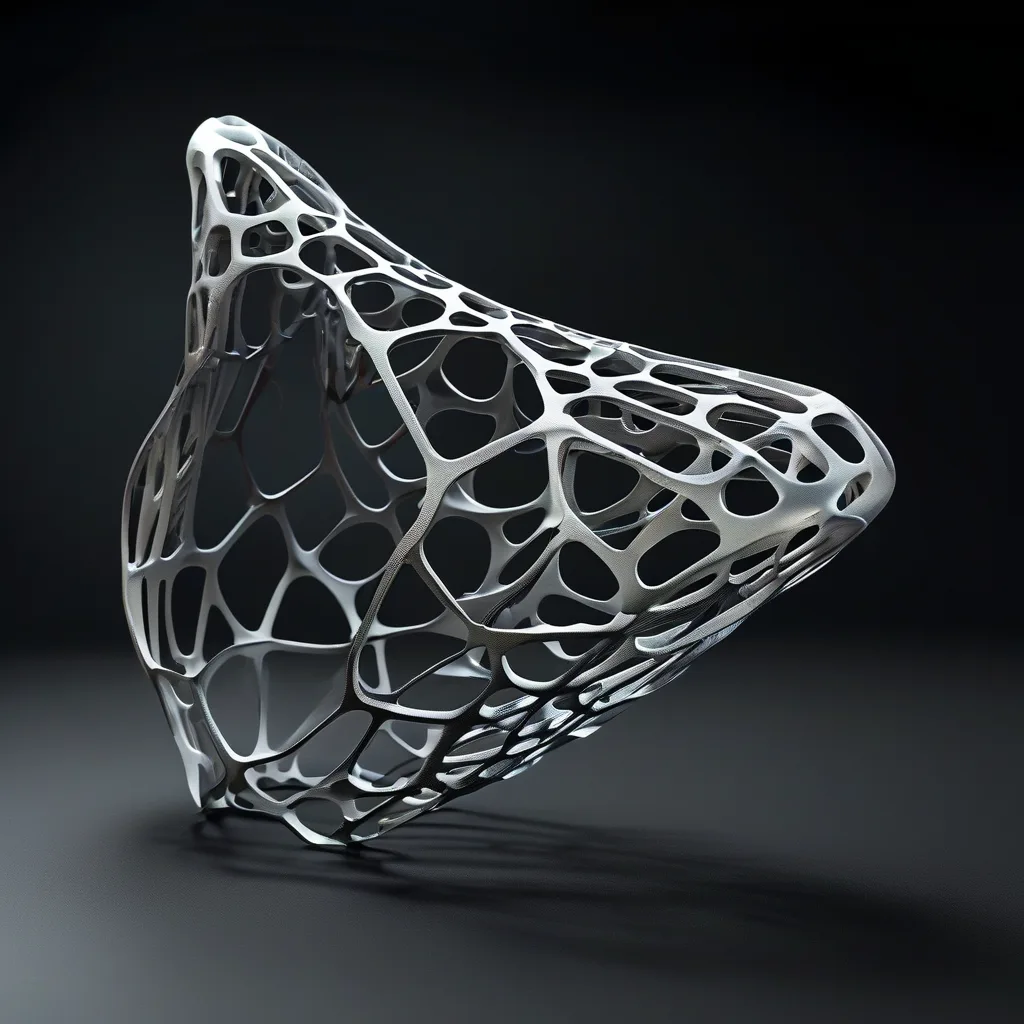
A machined titanium aerospace part routinely buys 6–20 kg of billet to fly 1 kg — and large structural forgings run far worse. The same part grown by laser powder bed fusion buys roughly 2–3.5 kg; wire-arc routes approach 2:1.[1][3] That gap — the buy-to-fly ratio — is the hidden tax of machining from billet, and it is usually the first number we check when deciding whether your part belongs on our AM materials list or on a CNC table.
What buy-to-fly actually prices
Buy-to-fly (BTF) is the weight of raw material purchased divided by the weight of the finished part. At 15:1, 93% of your titanium billet becomes chips. Worse, those chips recycle at a fraction of billet price — so the “waste” is purchased at mill-product value and recovered at scrap value. At titanium’s price, BTF is not an engineering curiosity; it is a line on your cost sheet that dwarfs machine time on complex parts.
The numbers, side by side
| Route | Typical BTF | Where it lands |
|---|---|---|
| CNC from billet, simple brackets | 6–11:1 | Industry average ~8–11:1[4] |
| CNC from forging, structural parts | 15–30:1 | Bulkheads, ribs, engine frames[3] |
| Laser powder bed fusion + finish machining | 2–3.5:1 | Powder reused across builds; chips limited to supports[3] |
| Wire-arc DED (WAAM) + finish machining | < 2–2.3:1 | Large near-net structures[1] |
NATO’s cost investigations into additive versus conventional manufacture found AM turning competitive around BTF 12:1 even on older systems[2] — modern powder beds move that threshold down. A practical rule used across the titanium supply chain: above roughly 3:1, the part usually costs less printed.
Why AM collapses the ratio
- You buy only the material the part keeps — plus supports and a small powder loss. Unused sieved powder goes back into the next build, not into a scrap bin.
- Complexity is free. Internal channels and lattices that would demand a 25:1 machining strategy add zero extra material in a powder bed.
- Consolidation compounds it. A 12-part assembly machined from separate billets becomes one bought-and-flown body.
When machining still wins
BTF is not the whole story. Simple prismatic titanium parts at 3:1 or below, parts needing full-surface ±0.01 mm, or volumes in the thousands with amortized tooling still belong on the CNC table — the honest answer is usually the hybrid: printed near-net body, machined critical surfaces, which is exactly how we run aerospace hardware. The decision rule we apply on every quote is three questions: what is the BTF, what does the geometry demand, and what does the tolerance map cover? See how the stages price out on the pricing page.
FAQ
What is a typical buy-to-fly ratio for machined titanium parts?
6–20:1 across aerospace hardware, with an industry average near 8–11:1 and structural forgings reaching 15–30:1.[4][3]
What buy-to-fly ratio does metal 3D printing achieve?
Roughly 2–3.5:1 for powder bed fusion with finish machining; wire-arc DED approaches under 2:1 on large structures.[1]
At what ratio does 3D printing beat machining?
As a rule of thumb, above ~3:1 the printed route usually costs less; older cost studies put the crossover near 12:1, so modern systems cross over earlier.[2]
Does buy-to-fly matter for stainless or aluminum parts?
Less — cheaper feedstock makes the waste cheaper. BTF becomes decisive exactly where material is expensive: titanium, Inconel, niobium.
Send the part — we’ll quote both routes with the BTF math shown →
References
- GEFERTEC. “Optimizing the Buy-to-Fly Ratio with WAAM: From 10:1 to Under 2:1.” gefertec.de. Link (accessed August 16, 2026).
- NATO STO. “An Investigation into the Comparative Costs of Additive Manufacture vs Machine from Stock” (RTO-MP-AVT-139). Link (accessed August 16, 2026).
- ScienceDirect, Circular Economy. “Impact of additive manufacturing on titanium supply chain.” 2023. Link (accessed August 16, 2026).
- Kingsbury. “Guide to Additive Manufacturing in Aerospace.” kingsburyuk.com. Link (accessed August 16, 2026).
- Aerospace Technology Institute. “Insight 08 — Additive Manufacturing.” ati.org.uk, 2021. Link (accessed August 16, 2026).